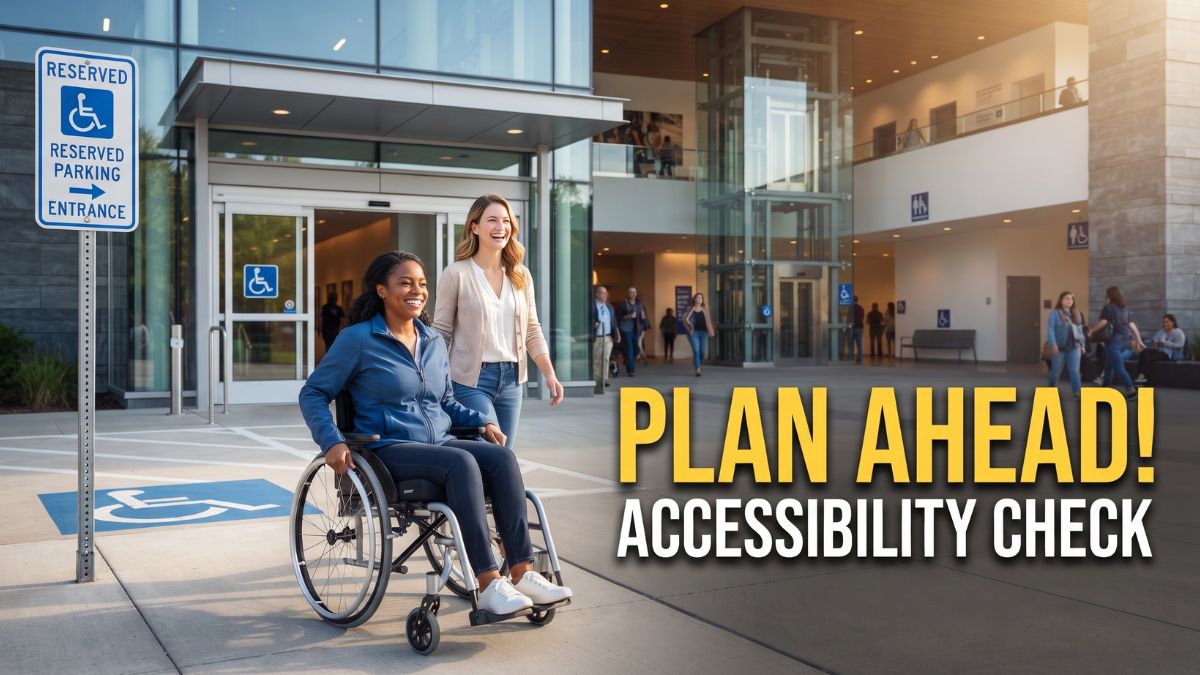
Planning an outing should involve more than choosing where to go. For people with disabilities, older adults, caregivers, parents with mobility needs, or anyone who relies on specific accessibility features, a little preparation can make the experience more comfortable and predictable.
Accessibility is not the same for everyone. One person may need step-free entry, while another may need accessible parking, an elevator, a quiet space, accessible restrooms, captioning or seating with a clear view. Even when a venue describes itself as accessible, the details can vary.
The most useful approach is to ask specific questions before leaving home. Instead of simply asking, “Is the place accessible?” it is better to find out what access actually looks like from arrival to departure.
Entrance
Start with the entrance because it is the first physical barrier a visitor may encounter.
Ask whether there is a step-free entrance and whether the accessible entrance is the same as the main entrance. If it is different, find out where it is located and whether it is clearly marked.
A venue may have a ramp but still present other challenges. The ramp could be steep, the doorway could be narrow, or the entrance could require a long route around the building.
It is also useful to ask whether the entrance remains accessible during busy events or after normal business hours.
Parking
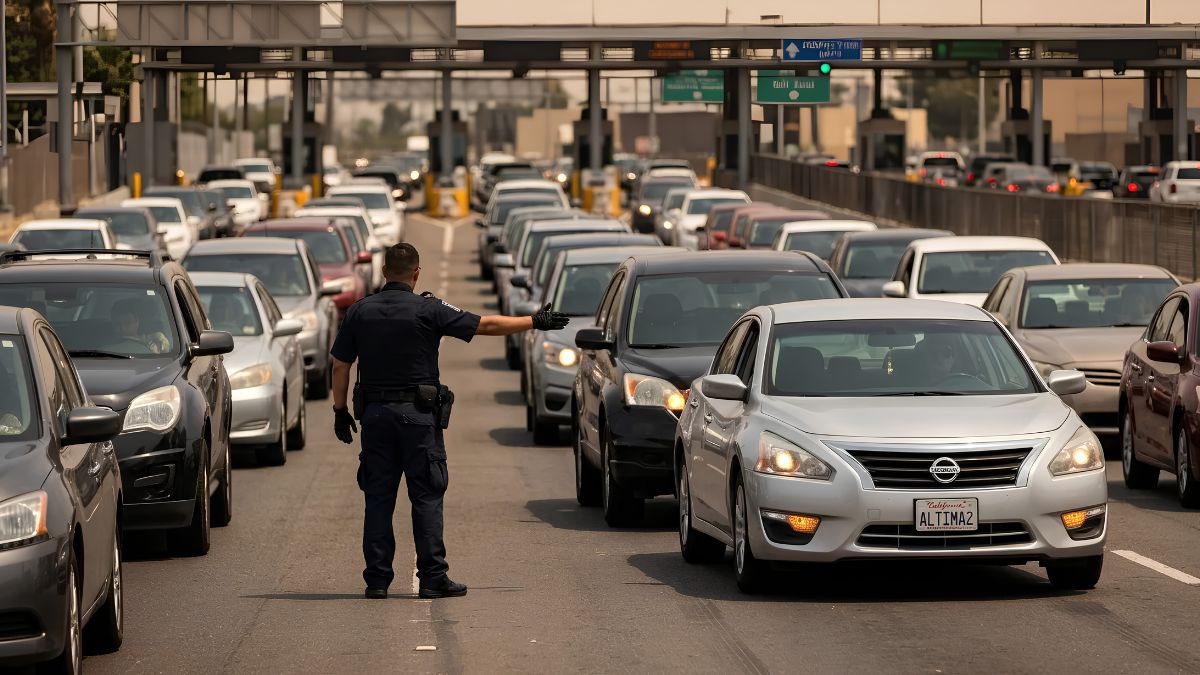
If you are driving, ask about accessible parking before your visit.
Find out how many accessible spaces are available, where they are located and whether a van-accessible space is available if needed. Ask whether parking is free, paid or controlled by a separate operator.
The distance between parking and the entrance can matter just as much as the existence of an accessible space.
For someone with limited mobility, a short, step-free route may be more useful than a larger parking area farther away.
The U.S. Department of Justice provides official information about accessible parking requirements under the Americans with Disabilities Act.
Restrooms
Accessible restrooms are another important question.
Ask whether there is an accessible restroom on the same floor as the activity. If the building has several floors, find out whether an elevator provides access between them.
You may also want to ask about the restroom’s size, grab bars, accessible sink and turning space if those features are important for your needs.
A venue may technically have an accessible restroom, but its location or layout may still make it difficult for a particular visitor to use.
Specific questions usually produce more useful answers than a general accessibility statement.
Elevators
For multilevel buildings, check how visitors move between floors.
Ask whether there is an elevator, whether it is currently operating and whether visitors can use it during the entire period of the event or activity.
Temporary closures can happen because of maintenance or construction. If an elevator is essential to your visit, confirming its availability shortly before departure can prevent an unexpected problem.
Also consider what happens if an emergency requires visitors to leave the building. Ask staff what accessible evacuation procedures are available if that information is relevant to your situation.
Seating
Seating requirements can differ considerably from person to person.
Someone using a wheelchair may need a designated wheelchair space with a companion seat. Another visitor may need an aisle seat, a chair with arms or a place to sit periodically while walking around.
Before attending a concert, theater performance, sporting event or public presentation, ask exactly where accessible seating is located.
You can also ask whether the venue permits a companion to sit nearby and whether accessible seats can be reserved in advance.
The ADA National Network provides information about accessible seating and related considerations.
Routes
Think about the entire route rather than just the destination.
A venue can have an accessible entrance while the path from the parking lot, transit stop or sidewalk remains difficult.
Ask whether the route includes stairs, steep slopes, uneven surfaces, narrow doors or other obstacles.
Outdoor attractions deserve particular attention. Parks, markets, festivals and historic locations may have terrain that changes considerably throughout the site.
If possible, look at an accessibility map, site map or recent photographs before visiting.
Transportation
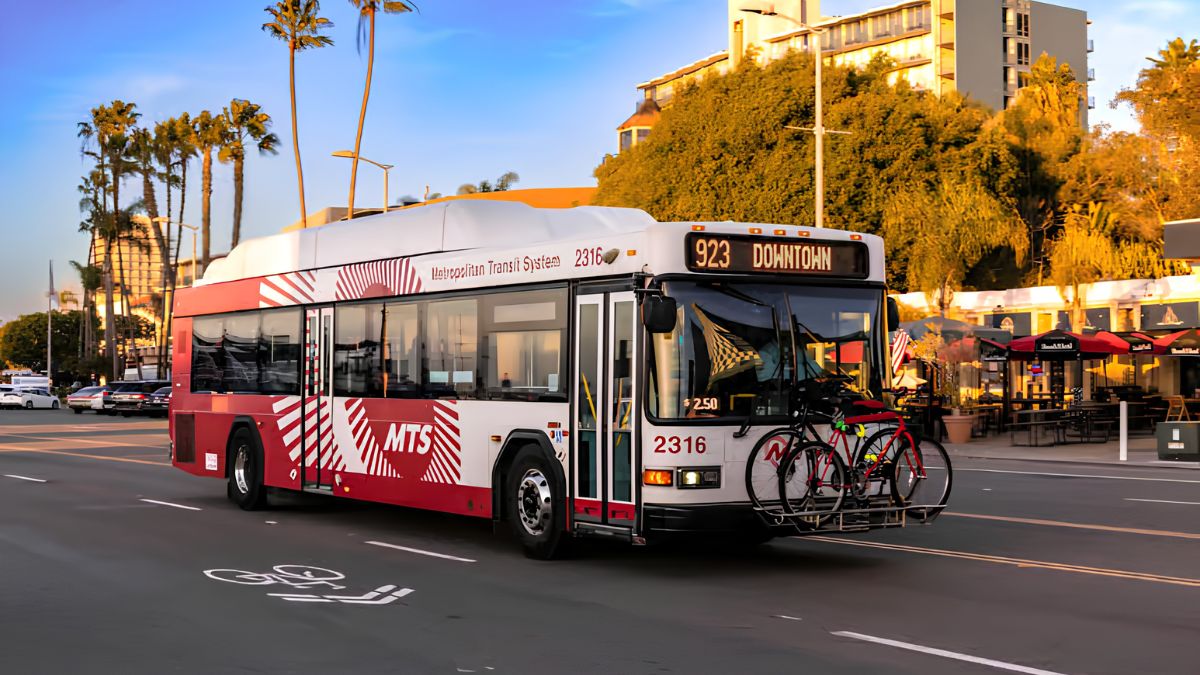
If you are not driving, investigate transportation options before the outing.
Ask whether the nearest bus or train station has step-free access and whether the route includes accessible vehicles. If you use paratransit, check booking requirements and pickup arrangements.
The Federal Transit Administration provides federal information about public transportation and ADA requirements.
Remember that an accessible destination does not necessarily mean the entire journey is accessible. Transportation, sidewalks and building entrances all form part of the trip.
Communication
Accessibility can include communication, not only physical access.
Visitors who are deaf or hard of hearing may need captions, an assistive listening system or an interpreter. Someone with a visual disability may need audio description, accessible digital information or permission to use a service animal.
Ask the venue which communication accommodations are available and whether they require advance arrangements.
For an event, this question is especially important because some services may not be provided automatically.
Service
If you use a service animal, confirm the venue’s policies in advance when appropriate.
Under the ADA, service animals have specific protections, although there are distinctions between service animals and emotional support animals. The official ADA service animal guidance explains the federal rules.
You may also want to ask about areas where service animals can relieve themselves and whether there are venue-specific procedures.
Staff should be able to explain the rules without requiring unnecessary personal information.
Sensory
Physical access is only one part of accessibility.
Some people are sensitive to loud sounds, flashing lights, crowds, strong smells or unpredictable environments. Museums, concerts, festivals and other public events can have sensory conditions that are difficult for some visitors.
Ask whether the venue offers quiet areas, sensory-friendly sessions, lower-volume periods or advance information about lighting and sound.
If no formal program exists, staff may still be able to describe the environment so you can decide whether it is suitable.
Policies
Check the venue’s policies before arriving.
Ask whether mobility equipment, medical devices, service animals, personal care items or specialized seating are permitted.
For large events, also ask about bag restrictions. A standard bag policy may affect someone who needs to carry medical supplies or accessibility equipment.
Do not assume that a general policy applies to every situation. Explain only the information necessary to ask what accommodation or exception may be available.
Rest
An accessible outing does not have to mean staying active continuously.
If walking or standing is difficult, identify places where you can sit and rest. At larger attractions, ask whether benches are available along the route.
For outdoor activities, consider shade, weather conditions and access to water.
A simple rest plan can make a significant difference. Instead of waiting until fatigue becomes a problem, build breaks into the outing from the beginning.
Timing
The timing of a visit can affect accessibility.
A location that is manageable during a quiet weekday morning may feel very different during a crowded weekend event.
Ask when the venue is typically busiest and whether there are quieter periods.
If you need assistance from staff, arriving with enough time can also reduce pressure. Rushing from the parking area to an event entrance can make a manageable accessibility challenge much harder.
Questions
Before an outing, consider asking:
- Is there a step-free entrance?
- Where is accessible parking?
- Is the route from parking to the entrance accessible?
- Are accessible restrooms available?
- Is an elevator operating?
- What accessible seating is available?
- Are captions or assistive listening systems provided?
- Are service animals permitted?
- Are quiet areas available?
- Can mobility equipment be used throughout the venue?
- Are there temporary construction or maintenance issues?
- Do accommodations need to be requested in advance?
These questions are more useful than simply asking whether a place is “ADA compliant.” They help you understand what the experience will actually look like.
Verification
Information found online can become outdated.
A website may say that a venue is accessible even though an elevator is temporarily unavailable or construction has changed the usual entrance. Reviews and photographs can also be old.
If a particular feature is essential, contact the venue directly before traveling.
When speaking with staff, be specific. Instead of saying, “Can someone in a wheelchair get inside?” ask, “Is there a step-free entrance from the parking area, and is the route wide enough for a wheelchair?”
Specific questions are easier for staff to answer accurately.
Backup
Even well-planned outings can encounter unexpected problems.
An elevator can stop working. A parking area can fill up. Construction can close a familiar entrance. Weather can make an outdoor route more difficult.
Having a backup plan can reduce stress.
Know where another entrance is located, identify an alternative restroom if possible and keep contact information for the venue available. If transportation is involved, know what alternatives exist if the first option does not work.
The goal is not to predict every possible problem. It is to avoid having one unexpected change end the outing.
Planning
Accessibility planning works best when it starts with the individual rather than a generic checklist.
Think about what you need from the moment you leave home until you return. That may include transportation, parking, entrances, seating, restrooms, communication, medication, food, rest breaks and the return journey.
Different people will have different priorities.
Someone who uses a wheelchair may focus on step-free routes. A person with a hearing disability may prioritize captioning. Someone with a sensory disability may care most about noise and crowd levels.
There is no single definition of a perfect accessible outing.
Confidence
Good accessibility information gives visitors more control over their plans.
When people know what to expect, they can make informed decisions about whether a destination fits their needs, what assistance to request and what equipment to bring.
It also helps caregivers and companions plan realistically rather than discovering barriers after arrival.
Most importantly, asking questions should not be viewed as an inconvenience. Accessibility information is useful for planning, and clear communication can help both visitors and venues avoid misunderstandings.
Planning an accessible outing is ultimately about understanding the whole experience, not simply checking whether a building has a ramp. Ask about transportation, entrances, parking, restrooms, seating, communication, sensory conditions and any temporary changes that could affect access. Then consider your own needs and create a realistic backup plan. A few specific questions before leaving can turn an uncertain trip into one that is easier to navigate and more comfortable from start to finish.
FAQs
What should I ask before an accessible outing?
Ask about entrances, parking, restrooms, seating and transportation.
Is an accessible entrance always the main entrance?
No, some venues have a separate accessible entrance.
Should I confirm accessibility before visiting?
Yes, especially if you need a specific accommodation.
Can accessibility change at a venue?
Yes, construction and maintenance can temporarily affect access.
Why is a backup plan useful?
It helps if an elevator, entrance or transport option changes.