Booking parking before a day trip can make the start of your journey more predictable, particularly when you are visiting a busy city center, tourist attraction, airport, stadium, or event venue. But a parking reservation is only useful if the location, timing, price, and rules match your plans.
A low advertised rate does not necessarily mean the parking option is the most convenient. You may need to consider walking distance, entry instructions, vehicle restrictions, cancellation rules, payment methods, and whether the reservation guarantees a space.
Checking these details before leaving home can reduce uncertainty and help you avoid arriving at a car park that is closed, difficult to access, or farther from your destination than expected.
Location
Start by checking the exact location of the parking facility.
A car park may be described as being “near” a museum, station, beach, or attraction while still requiring a considerable walk. Look at the address and map rather than relying only on the name.
If you are traveling with children, older passengers, luggage, or anyone with mobility limitations, the walking distance can make a significant difference.
Also check which entrance you should use. Large venues sometimes have several entrances, and the closest parking facility to one entrance may be inconvenient for another.
Timing
Check when your reservation begins and ends.
Some parking bookings are valid only during specific hours. Others may allow all-day access but require you to enter within a particular window.
If your attraction opens at 10 a.m., for example, arriving at 9:30 a.m. may or may not be permitted. Similarly, a reservation ending at 6 p.m. could become a problem if your plans change.
Leave some flexibility when possible. Day trips rarely follow a schedule perfectly.
Access
Read the instructions for entering and leaving the parking facility.
Some car parks use a ticket machine, while others rely on a license plate recognition system, QR code, mobile app, keypad, or booking reference.
Know what you need before arriving. If a digital reservation must be displayed on your phone, make sure you can access it without relying on a weak mobile signal.
For facilities with gates, check whether your booking includes instructions for opening them.
These details may seem minor, but they can become important when you are sitting behind other vehicles trying to enter.
Price
Look beyond the headline parking rate.
Check whether the quoted price includes taxes, booking fees, service charges, or other costs. Some parking platforms display a base rate before additional charges are added.
Also check whether the price is based on a fixed period or whether extra time will result in additional charges.
For a day trip, compare the total cost for the entire period you expect to park rather than comparing only the advertised hourly rate.
A slightly more expensive car park may offer a better overall value if it is closer to your destination or provides a longer booking window.
Restrictions
Every parking facility may have different rules about which vehicles can use it.
Check restrictions involving vehicle height, size, weight, trailers, motorcycles, electric vehicles, or commercial vehicles where relevant.
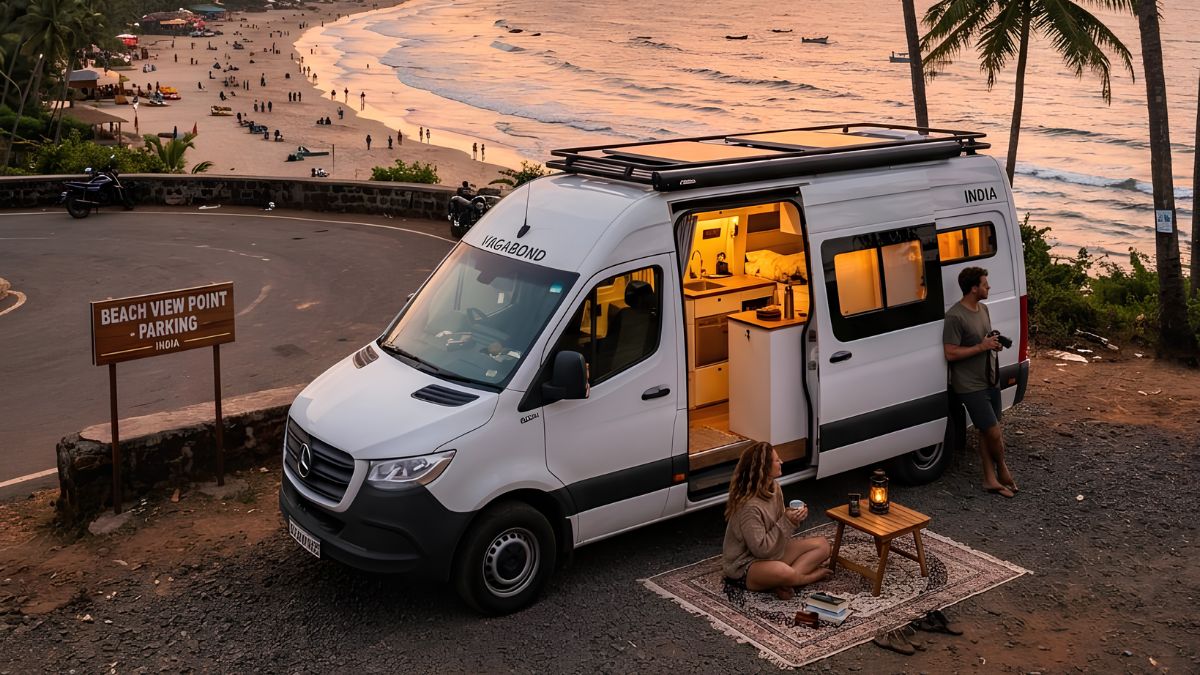
This is especially important if you are driving a large SUV, van, camper, or vehicle with a roof rack.
Some facilities have low ceilings or narrow entrances that may not be obvious from the booking page.
If you are uncertain, contact the operator before booking rather than discovering the restriction at the entrance.
Security
Consider the type of parking facility and its security arrangements.
A multi-level garage, private car park, street parking area, hotel facility, or park-and-ride location may have different security features.
Look for information about lighting, controlled access, cameras, staff presence, and opening hours. Do not assume that a facility is monitored simply because it is described as secure.
You should also review the operator’s terms regarding responsibility for vehicles and belongings. Parking operators may limit their liability for theft or damage.
Never leave valuable items visible inside your vehicle, even when using a paid parking facility.
Distance
Walking distance deserves more attention than it often receives.
A parking facility that is only a few minutes away by car may be a long walk from the actual attraction entrance. Check the pedestrian route rather than estimating distance from the road map.
Consider the return journey as well. After several hours of sightseeing, a 20-minute walk to the car may feel very different from the same walk at the beginning of the day.
If the attraction provides an official parking area, compare it with nearby private facilities. The closest option may cost more, but it could save time and walking.
Cancellation
Check the cancellation and refund policy before paying.
Some parking reservations can be canceled or changed without a fee until a specified deadline. Others are partially refundable or completely non-refundable.
This matters when your day trip depends on weather, transportation, attraction availability, or other uncertain factors.
Do not assume that you can automatically receive a refund if your plans change.
Read the terms before completing the reservation, particularly when booking several days or weeks in advance.
Reviews
Customer reviews can provide practical information that a booking page may not explain.
Look for recent comments about entry instructions, availability, signage, walking distance, cleanliness, security, payment problems, and whether the actual experience matched the listing.
Pay attention to repeated complaints rather than one isolated negative review.
A parking facility may have thousands of positive reviews but still have a recurring problem during large events or peak periods. Recent reviews can therefore be particularly useful.
Payment
Check how payment works.
Some parking facilities require payment online before arrival. Others allow payment at a machine or exit barrier. Some use an app rather than accepting cash or cards directly.
Make sure you understand whether your reservation has already covered the parking cost or whether additional payment is required when leaving.
Keep your booking confirmation and payment receipt until you have completed the trip.
If the facility uses an app, download it and create an account before arriving rather than trying to complete the process while parked at the entrance.
Availability
A parking reservation can be particularly useful when visiting a busy destination, but availability is not always the same as convenience.
Popular attractions can have limited parking during weekends, holidays, festivals, concerts, sporting events, and school vacations.
Check whether the car park is likely to be affected by a special event on the day of your trip.
If your preferred facility is full, look for official alternatives such as park-and-ride locations or other designated parking areas.
Do not assume that street parking will be available simply because a nearby parking facility is full.
Restrictions
Pay attention to local parking restrictions outside private car parks.
Street parking may involve resident permits, time limits, loading zones, disabled parking requirements, payment periods, or restrictions on particular days.
Signs and road markings generally determine the actual rules, so check them when you arrive.
Parking incorrectly can turn an otherwise inexpensive day trip into an avoidable expense.
For travelers visiting an unfamiliar city, the local authority’s official parking website is usually a better source for regulations than an unofficial travel forum.
Alternatives
Before booking, compare several options.
You might have a choice between:
| Option | Main advantage | Possible drawback |
|---|---|---|
| Venue parking | Usually close to the attraction | May cost more |
| Public garage | Often central and structured | Can fill during busy periods |
| Private parking | May offer advance booking | Terms vary by operator |
| Park and ride | Can reduce city-center driving | Requires another transport connection |
| Street parking | Sometimes inexpensive | Availability and restrictions vary |
The right choice depends on the destination, length of your visit, number of passengers, and total cost.
A park-and-ride facility may be particularly useful when central parking is expensive or limited. You can leave the car outside the busiest area and continue by bus, train, or another local service.
Directions
Do not wait until you arrive to work out how to reach the car park.
Save the address in your navigation app and read the operator’s arrival instructions beforehand.
Some facilities are accessed from a particular street or require you to approach from a specific direction. A navigation app may direct you to the wrong entrance if the facility has several access points.
If the booking confirmation includes a map or written directions, save that information as well.
This is especially useful if you expect poor mobile coverage or are traveling to a large venue with complicated roads.
Arrival
Give yourself enough time to park and walk to your destination.
If an event starts at 10 a.m., arriving at the parking facility at 9:55 a.m. may leave no room for queues, payment problems, finding a space, or walking to the entrance.
Busy days can create delays even when you have reserved a space.
For an important appointment or timed attraction, consider arriving earlier than you would on a normal day.
Return
Think about leaving before you book.
Check the facility’s closing time and whether vehicles can be collected at any hour. Some parking locations operate around the clock, while others close their entrances or exits overnight.
If your day trip includes dinner or an evening event, make sure your car can still be accessed after your planned departure time.
Also check whether your booking allows you to leave and return during the same reservation. A reservation for one continuous stay may not permit multiple entries.
Confirmation
After booking, check the confirmation carefully.
Verify:
- Date
- Entry and exit times
- Location
- Vehicle details
- Booking reference
- Total price
- Cancellation terms
- Entry instructions
- Contact information
If the license plate number is part of the booking, make sure it is correct.
Keep the confirmation available on your phone and, where practical, save an offline copy.
A few minutes spent checking the confirmation can prevent confusion when you arrive.
Planning
Parking should be treated as part of the day’s itinerary rather than a separate task.
Before making a reservation, confirm where you are going, how long you expect to stay, when you can enter and leave, and how far you will need to walk.
Then compare the total cost and conditions of several suitable options.
For a short trip to a quiet destination, advance parking may not be necessary. For a busy city, popular attraction, or major event, booking ahead can provide more certainty.
The most useful parking reservation is not necessarily the cheapest one. It is the one that fits your schedule, location, vehicle, budget, and plans. By checking the practical details before you leave, you can spend less time worrying about where to park and more time enjoying the day.