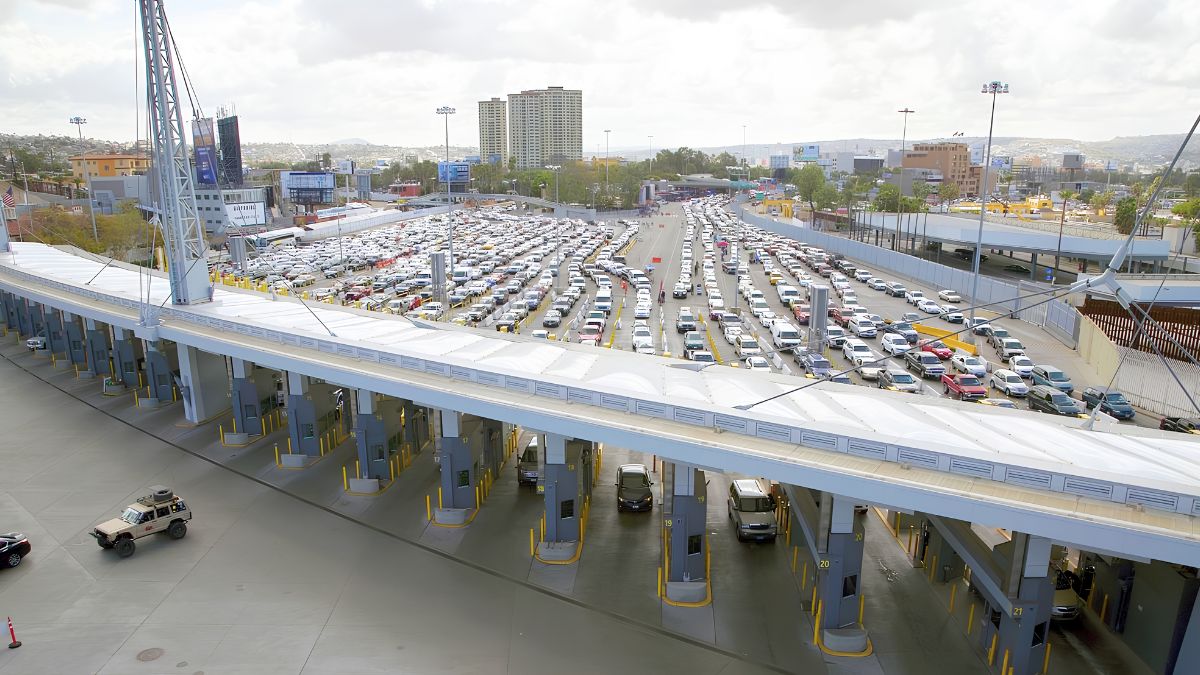
Crossing the United States-Mexico border at San Ysidro requires more than choosing a departure time and following a navigation app. Traffic conditions can change throughout the day, and the time needed to reach a port of entry may differ from the time spent waiting for inspection. For travellers heading from Tijuana into San Diego, understanding official border wait-time updates can help with departure planning, appointments, work schedules, and onward travel.
The information available online is useful, but it needs to be interpreted carefully. A reported wait time is an estimate, not a guarantee that a vehicle or pedestrian will cross within that period. Conditions can change between the time an update is published and the time a traveller reaches the inspection area.
The most reliable approach is to consult official sources, identify the correct crossing and lane category, check when the information was updated, and review it again before leaving. Knowing when to recheck the information is just as important as knowing where to find it.
Sources
For travellers approaching San Ysidro from Mexico, the primary official source for estimated waits at US land ports of entry is US Customs and Border Protection (CBP).
The agency provides its Border Wait Times service, which reports estimated waiting times for participating land ports of entry. Travellers can select a port and review information for relevant crossing categories.
San Ysidro is a major land port of entry connecting Tijuana, Baja California, with San Diego, California. However, travellers should confirm that the selected location is San Ysidro rather than another nearby crossing, such as Otay Mesa.
Official information matters because third-party websites and navigation applications may display traffic congestion, historical estimates, or user-submitted observations rather than the same inspection-wait estimates published by CBP.
A navigation app can still be useful for assessing the journey to the border. However, road congestion before the port of entry and the estimated queue for inspection are different measurements.
Travellers should therefore use official border information to assess the reported wait and a suitable navigation service to evaluate the drive to the crossing.
Categories
Before interpreting a wait-time figure, confirm that it applies to the way you intend to cross.
San Ysidro has different processing arrangements, and the relevant information depends on whether you are travelling by vehicle, walking, or using an eligible expedited programme.
For vehicle crossings, the distinction between general traffic and designated lanes can be important. For example, Ready Lanes are intended for eligible travellers using approved travel documents and lane procedures. SENTRI is an expedited programme for approved participants using designated facilities.
Do not assume that a shorter estimate for an expedited lane applies to ordinary vehicle traffic. Eligibility, lane availability, operating arrangements, and documentation requirements must all be considered.
Pedestrian crossings also have their own wait-time categories. Someone walking across the border should not rely on a vehicle estimate to plan their journey.
The official CBP Border Wait Times service provides the starting point for identifying the appropriate category. Travellers should review the category descriptions and current port information rather than selecting the shortest displayed figure.
Estimates
A border wait-time estimate describes an expected waiting period under the conditions reflected in the reported information. It does not guarantee the duration of an individual crossing.
Inspection demand can vary with the time of day, traffic volume, staffing, operational changes, and other circumstances. A wait that appears manageable during one check may increase before departure or while a traveller is approaching the queue.
It is also important to distinguish the estimated border queue from the total journey time.
For example, someone travelling from central Tijuana to an appointment in San Diego may need to account for several separate periods:
- The drive from their starting point to the port of entry.
- The queue before inspection.
- The inspection process itself.
- The journey from the US inspection area to the final destination.
These periods are not necessarily displayed together in one official wait-time figure.
A practical travel plan should therefore allow for the possibility that the total journey will take longer than the published border estimate. The amount of additional time needed depends on the appointment, road conditions, crossing method, and the consequences of arriving late.
Timing
The most useful time to check border information is shortly before departure, when the latest available estimate can inform the immediate travel decision.
Checking much earlier may help with general planning, but an estimate reviewed hours before leaving may not reflect the conditions encountered later.
A practical checking routine has three stages.
First, check the official information while planning the journey. This establishes a baseline and helps identify the correct port and crossing category.
Second, check again shortly before leaving. Compare the latest estimate with the earlier reading and consider whether the reported wait is increasing or decreasing.
Third, recheck if there is a significant delay before reaching the border, a change in the travel plan, or new information suggesting that conditions have changed.
There is no universal interval that guarantees an accurate prediction. Rechecking every few minutes may provide little additional value if the journey is still some distance away, while relying on a single reading throughout a long trip may leave travellers working with outdated information.
The right approach is to match the frequency of checks to the length and importance of the journey.
Departure
Choosing when to leave requires more than comparing two wait-time estimates.
A traveller with a flexible schedule may be able to postpone departure if the reported queue increases. Someone travelling for a medical appointment, an important work meeting, or a flight may have less flexibility and should allow a larger contingency.
Consider a hypothetical example. A traveller checks the official site and sees an estimated wait of 35 minutes. Before leaving, a later reading shows 55 minutes. The increase suggests that the traveller should reassess the journey, but it does not establish exactly how long the eventual crossing will take.
The traveller should consider the drive to San Ysidro, the inspection queue, the onward trip, and the time by which they must arrive. If an alternative departure time is possible, a fresh check may help inform that decision.
It is equally important not to assume that a lower wait-time estimate will remain low. A shorter reported queue can change as additional vehicles arrive or inspection conditions change.
For time-sensitive journeys, planning around the latest estimate while maintaining a reasonable buffer is generally more dependable than attempting to identify a perfect departure minute.
Trends
Comparing successive official readings can provide useful context, but the comparison should be treated as an indication rather than a forecast.
Suppose the reported wait increases across several checks. This may indicate growing demand or changing operating conditions. If the figure falls, the queue may be easing. Neither pattern guarantees what will happen next.
A short record of readings can help regular travellers recognise how quickly conditions sometimes change. For example, a commuter who crosses frequently might note the time of each check, the lane category, and the reported wait.
However, personal records should not replace current official information. Historical experience may be useful for broad planning, but it cannot confirm today’s queue conditions.
Travellers should also avoid comparing figures from different categories or ports as if they represented the same conditions. A pedestrian estimate at San Ysidro cannot be directly compared with a general vehicle estimate at Otay Mesa to determine which journey will be faster.
The comparison only becomes meaningful when the crossing method, lane eligibility, and relevant travel circumstances are understood.
Alternatives
If the reported wait at San Ysidro is longer than expected, travellers may consider changing their departure time or investigating another crossing. However, a different port is not automatically the faster option.
Otay Mesa is another major port of entry in the San Diego region, but its suitability depends on the starting point, destination, crossing method, lane eligibility, and current conditions.
Before changing routes, compare the official wait information for the relevant port and category. Then account for the extra driving time and any other practical requirements.
A lower estimated border wait may be outweighed by a longer journey to the alternative crossing. In addition, travellers must confirm that the alternative port supports their intended crossing method and has appropriate facilities and operating arrangements.
Do not make a route change solely because a third-party map shows less congestion on a nearby road. Road traffic and inspection queues are related to the overall journey, but they are not interchangeable measurements.
For a current comparison, use the official CBP Border Wait Times website and a navigation service to assess the full route.
Preparation
Official wait-time information is only one part of a successful border crossing. Travellers should also check their documents, route, destination, and any requirements specific to their circumstances.
For people entering the United States, document and admissibility requirements depend on citizenship, immigration status, travel purpose, and other factors. A short queue does not guarantee admission or determine whether a person has the documents required for travel.
CBP provides general guidance through its official website. Travellers should consult the relevant information before departure if they have questions about entry requirements or inspection procedures.
It is also sensible to keep a phone charged, have the destination address available, and avoid checking a device while driving. If another person is travelling with you, they may be able to review updates safely while the vehicle is parked.
For regular commuters, saving the official wait-time page and establishing a repeatable checking routine can make departure planning more consistent.
Checklist
A simple checklist helps ensure that the wait-time figure is interpreted in context rather than used as the sole basis for a travel decision.
| Check | What to confirm |
|---|---|
| Location | The selected port is San Ysidro |
| Category | The estimate matches your crossing method and lane eligibility |
| Update | Review the latest information available |
| Trend | Compare with an earlier reading when useful |
| Journey | Include driving and onward travel time |
| Flexibility | Decide whether departure can be adjusted |
| Requirements | Confirm documents and relevant travel rules |
| Final review | Recheck shortly before leaving if circumstances warrant |
The main objective is not to predict the exact moment when the border queue will be shortest. It is to make a better-informed decision using the most relevant official information available.
San Ysidro border wait-time updates are most useful when travellers understand what the figures represent, choose the correct crossing category, and check the information again when departure approaches. A single estimate should never be treated as a promise, particularly when the journey involves a fixed appointment or another time-sensitive commitment.
By combining current CBP information with realistic journey planning and an appropriate time buffer, travellers can make more informed decisions about when to leave and when another check is worthwhile.
FAQs
Where can I check official San Ysidro border wait times?
Use the US Customs and Border Protection Border Wait Times website.
When should I recheck border wait times?
Check shortly before departure and again if delays or travel plans change.
Are border wait-time estimates guaranteed?
No. They are estimates and can change as traffic and inspection conditions change.
Do pedestrian and vehicle wait times differ?
Yes. Select the category that matches your crossing method.
Should I consider another border crossing?
Compare official waits, driving time, eligibility, and your final destination first.