Mexican home cooking relies on a range of techniques, from simmering beans and preparing soups to making tortillas, blending salsas, and cooking meat over high heat. The kitchenware used for these tasks can influence cooking results, preparation time, cleaning effort, and long-term household expenses.
Choosing the right equipment does not necessarily mean buying a complete set of expensive cookware. A few well-selected pots, pans, utensils, and preparation tools can cover most everyday needs. The key is understanding how different materials perform, which sizes suit your household, and how much maintenance each item requires.
For home cooks preparing traditional Mexican dishes, these decisions are particularly relevant because recipes often involve different cooking methods. A heavy pot may work well for frijoles de la olla, while a flat griddle is useful for tortillas and quesadillas. Comparing kitchenware by function rather than appearance can help households build a practical kitchen that supports both traditional recipes and everyday meals.
Materials
Kitchenware materials affect heat distribution, cooking performance, weight, maintenance, and durability. Each material has advantages, but no single option is ideal for every task.
Cast iron is known for retaining heat and providing a stable cooking surface. A well-seasoned cast-iron skillet can be useful for searing meat, cooking vegetables, and preparing certain tortillas or toasted ingredients. However, cast iron is relatively heavy and requires appropriate care to prevent rust.
Stainless steel offers a different balance. It is generally durable, does not require seasoning, and works well for boiling, simmering, and preparing sauces. Food may stick if the pan is not used correctly, so temperature control and sufficient cooking fat can make a difference.
Aluminum cookware heats quickly and is usually lighter than cast iron. It can be convenient for everyday cooking, although performance varies by thickness and construction. Hard-anodized aluminum products have a treated surface designed to improve durability, while some aluminum pans include stainless steel layers to improve their cooking characteristics.
Traditional Mexican cookware also includes clay pots and ceramic vessels. These can be suitable for certain slow-cooked dishes and serving applications, depending on their design and intended use. However, not every clay vessel is suitable for direct heat. Before purchasing one, confirm that it is food-safe and designed for the specific cooking method you intend to use.
Comparison
The following table summarizes common cookware materials and their practical uses.
| Material | Main advantages | Main limitations | Suitable uses |
|---|---|---|---|
| Cast iron | Strong heat retention and durability | Heavy; needs seasoning and drying | Searing, frying, browning |
| Stainless steel | Durable and easy to maintain | Food may stick without proper technique | Soups, sauces, boiling |
| Aluminum | Lightweight and responsive heating | Quality varies by thickness and coating | Everyday pots and pans |
| Nonstick | Easy food release and cleaning | Surface can wear or become damaged | Eggs, delicate foods |
| Clay or ceramic | Traditional appearance and heat retention in suitable designs | May be fragile or incompatible with some heat sources | Slow cooking and serving |
| Carbon steel | Responsive heating and a surface that can develop seasoning | Requires maintenance to prevent rust | Griddles, frying, high-heat cooking |
Material choice should reflect how frequently an item will be used. A household that makes tortillas every day may benefit from a dedicated griddle, while a household that primarily prepares soups and stews may get more value from a large, durable pot.
Tortillas
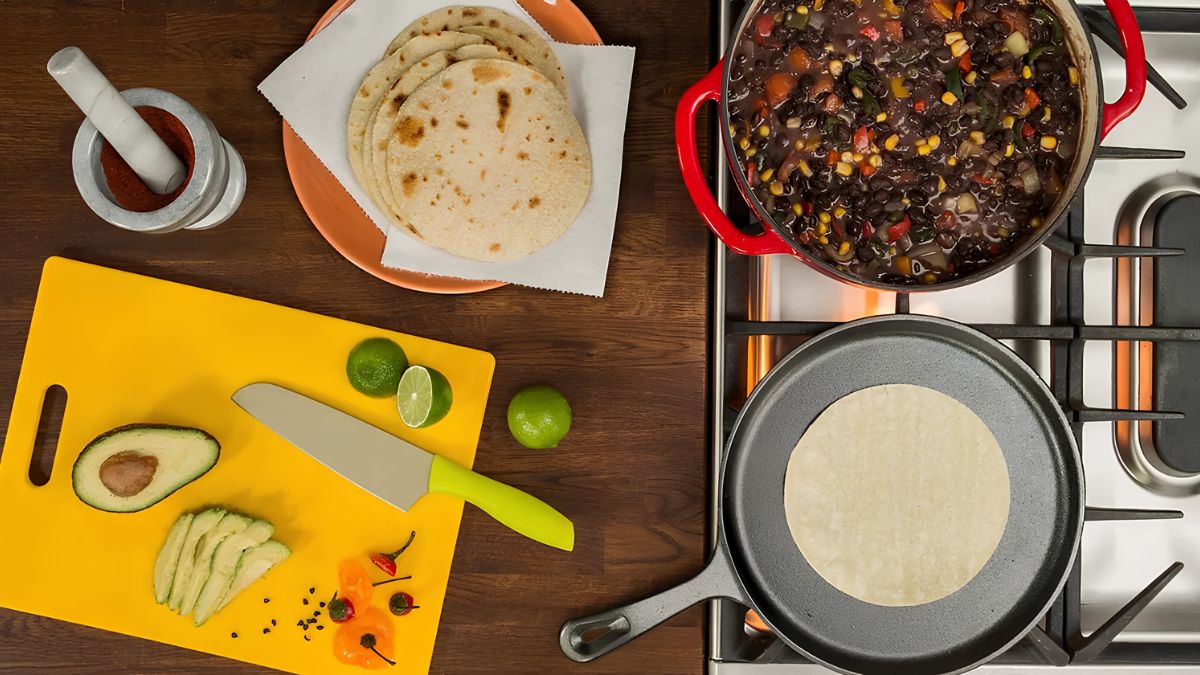
Tortillas are central to many Mexican meals, making a suitable cooking surface a useful kitchen investment. A comal is a flat cooking surface traditionally used for heating tortillas, toasting chiles, and preparing other ingredients.
Comals are available in cast iron, carbon steel, aluminum, and other materials. Cast iron retains heat well, while carbon steel generally heats and responds to temperature changes more quickly. Aluminum models tend to be lighter and easier to handle.
The appropriate choice depends partly on the stove. Before buying a comal, confirm whether it is compatible with gas, electric, ceramic, or induction cooking. Some models are designed for particular heat sources, and an uneven or oversized surface may heat inconsistently.
Size also matters. A small comal may be sufficient for one or two people, while a larger household may prefer a surface that accommodates multiple tortillas at once. However, a large comal may be difficult to store or may not fit comfortably on a smaller stovetop.
For households that prepare tortillas regularly, a comal with a flat, stable surface and a comfortable handle can make everyday cooking more convenient.
Pots
Pots are essential for preparing frijoles, pozole, caldo, soups, stews, and rice. Choosing the right capacity can prevent overcrowding while avoiding the inconvenience of heating an unnecessarily large vessel.
A small saucepan is useful for reheating sauces, warming beans, and preparing modest portions. A medium pot can handle rice, soups, and everyday side dishes. A larger stockpot is more suitable for family gatherings, batch cooking, or recipes involving substantial quantities of broth.
For households that frequently prepare dried beans, a sturdy medium or large pot with a secure lid can be a practical choice. Stainless steel offers easy maintenance, while enameled cast iron may provide good heat retention. The best option depends on the household’s cooking habits, budget, and willingness to manage heavier cookware.
When comparing pot sizes, consider usable capacity rather than external dimensions alone. A pot should leave enough room for liquids to simmer without overflowing. Handles should remain easy to grip, particularly when the pot is full.
Lid fit is another consideration. A well-fitting lid helps control evaporation and makes it easier to manage simmering dishes. If the lid has a handle, check whether it becomes excessively hot during cooking.
Cleaning
Cleaning requirements affect how practical kitchenware will be over time. A pan that performs well but requires more maintenance than the household can manage may not be the best everyday option.
Stainless steel is generally straightforward to clean with warm water, dish soap, and a nonabrasive sponge. Stubborn residue may require soaking or a cleaner suitable for the manufacturer’s finish.
Cast iron and carbon steel need different care. Many seasoned models should not be left soaking for extended periods because prolonged exposure to water can contribute to rust. Follow the manufacturer’s instructions, dry the cookware thoroughly, and apply a light layer of oil when appropriate.
Nonstick cookware is often easier to clean because food releases more readily. However, abrasive scrubbers and metal utensils can damage some coatings. Use compatible utensils and avoid overheating cookware beyond the manufacturer’s stated limits.
Clay and ceramic cookware require particular attention to product instructions. Some vessels are dishwasher-safe, while others need handwashing or gradual temperature changes to reduce the risk of cracking.
For households preparing food daily, cleaning time should be considered alongside purchase price. A slightly more expensive item that is easier to maintain may offer better value if it is used frequently.
Durability
Durability depends on more than the material name. Construction quality, thickness, surface treatment, handle attachment, and daily use all influence how long cookware remains serviceable.
When inspecting a pot or pan, check whether it sits flat on the counter and has a stable base. Loose handles, sharp edges, uneven surfaces, and poorly fitted lids may indicate construction problems.
For nonstick products, examine the manufacturer’s care instructions and warranty. Coatings can wear over time, especially when exposed to abrasive cleaning, overheating, or incompatible utensils. Damaged cookware should be assessed according to the manufacturer’s guidance and replaced when it can no longer be used safely.
Cast iron and stainless steel can provide many years of service when maintained properly. However, heavy cookware may be less convenient for people who have difficulty lifting it. Practical durability includes whether the item remains comfortable and safe to use, not just whether it physically lasts.
A reasonable purchasing strategy is to invest more in frequently used items, such as a reliable comal, a medium saucepan, and a sturdy stockpot. Less frequently used specialty tools can often be purchased at a lower price, provided they meet basic quality and safety requirements.
Sizes
Kitchenware should match the number of people being served, available storage space, and typical meal sizes. Buying oversized equipment for a small household can waste storage space and make daily cooking less efficient.
A household cooking for one or two people may need a small saucepan, a medium skillet, a modest pot, and a compact comal. A family that regularly cooks beans, soups, rice, and several side dishes may benefit from a larger pot and a wider cooking surface.
Consider stove dimensions before buying wide pans or griddles. A pan that extends too far beyond the heating element may cook unevenly, while a large comal may occupy space needed for other dishes.
Storage should also be part of the decision. Pots that nest together can save cabinet space, but stacking pans with delicate coatings without protection may cause damage. Removable handles or compact designs can help in smaller kitchens.
If possible, measure the storage area and cooking surface before purchasing. These simple checks can prevent problems that are difficult to solve after the cookware has been brought home.
Budget
A kitchenware budget should account for purchase price, expected lifespan, maintenance, and replacement costs. The least expensive product is not always the most economical choice, especially when it needs frequent replacement.
Start with equipment that supports the meals you cook most often. For many Mexican households, this may include a comal, a medium pot, a large pot for soups or beans, a skillet, a sharp knife, a cutting board, and heat-resistant utensils.
Additional tools can be purchased as cooking needs develop. A tortilla press may be useful for households that regularly make tortillas from masa, while a blender may be valuable for preparing salsa, sauces, and blended soups.
Compare products by construction and suitability rather than relying solely on brand reputation. Read care instructions, check warranty terms, and consider whether replacement parts or lids are available.
It is also sensible to avoid purchasing a large cookware set if several pieces will rarely be used. Selecting individual items can provide better value when the household already knows which tools it needs.
Safety
Food-contact safety should be considered alongside performance and price. Buy cookware intended for food preparation and follow the manufacturer’s instructions concerning temperature limits, cleaning, and compatible cooking surfaces.
Avoid using cookware with badly damaged coatings or cracked food-contact surfaces when the damage may compromise safe use. For older or imported items, especially decorative pottery, confirm that the glaze and materials are suitable for preparing food rather than assuming that traditional appearance guarantees food safety.
Use utensils that are compatible with the cooking surface and keep handles positioned safely to reduce the risk of accidental contact. Heavy pots should be lifted carefully, particularly when filled with hot liquids.
For clay cookware, follow any preparation or seasoning instructions supplied by the manufacturer. Not every clay pot is suitable for stovetop use, ovens, or sudden changes in temperature.
Choosing kitchenware for Mexican home cooking is ultimately about matching equipment to cooking habits, household size, and maintenance preferences. A durable pot for beans, a suitable comal for tortillas, and a practical skillet can provide a strong foundation without requiring an extensive collection.
By comparing materials, dimensions, cleaning requirements, and construction quality before purchasing, households can select kitchenware that supports traditional recipes and everyday meals while keeping long-term costs manageable.
FAQs
What cookware is best for Mexican home cooking?
A comal, a sturdy pot, and a versatile skillet cover many everyday cooking needs.
Which material is best for cooking tortillas?
Cast iron, carbon steel, and suitable aluminum comals are common options.
Is stainless steel suitable for Mexican dishes?
Yes. It works well for beans, soups, sauces, and many everyday meals.
How should cast iron cookware be cleaned?
Follow the care instructions, dry it thoroughly, and maintain its seasoning.
How can I choose the right pot size?
Consider household size, portion requirements, cooking habits, and storage space.