Mexican food offers a wide range of flavors, ingredients, and cooking methods that can make a home tasting event both enjoyable and informative. From freshly prepared tortillas and grilled meats to tangy salsas, roasted vegetables, and traditional drinks, a well-planned menu allows guests to look into several dishes without committing to a single large meal.
San Ysidro, a community in southern San Diego near the United States-Mexico border, provides an interesting source of inspiration because its food culture reflects the connections between Mexican culinary traditions and everyday life along the border.
Planning a Mexican food tasting at home does not require specialized kitchen equipment or an extensive list of ingredients. A selection of familiar staples, careful preparation, and a balanced menu can provide a practical starting point. Hosts can combine small servings of traditional Mexican dishes with regional influences, fresh seasonal produce, and options for different dietary preferences.
The goal is to create a tasting experience that introduces guests to different ingredients and flavors while recognizing the variety of Mexico’s culinary traditions. Knowing the ingredients, organizing the preparation schedule, and presenting each dish thoughtfully can help make the event manageable.
Planning
Start by deciding how many people will attend and how the tasting will be served. A casual gathering with food arranged on a shared table requires a different approach from a structured tasting menu in which each dish arrives separately.
For a group of four to six people, consider preparing five to seven small dishes. This might include two taco fillings, two salsas, one vegetable-based dish, a side of beans, and a traditional-style beverage. Small servings allow guests to compare ingredients and seasoning without creating unnecessary food waste.
San Ysidro can serve as a starting point for exploring border-region food traditions. Its location encourages an appreciation of the movement of ingredients, cooking techniques, and food preferences between communities on both sides of the border. However, Mexican cuisine is diverse, and no single menu can represent every region or household.
For useful background on Mexican food traditions, consult the UNESCO description of traditional Mexican cuisine. The resource explains how Mexican cooking connects agricultural knowledge, preparation methods, community participation, and cultural heritage.
When selecting dishes, consider the available cooking space and how much time you can devote to preparation. A menu with several items that require last-minute cooking may become difficult to manage. Combining freshly cooked dishes with components prepared in advance usually provides a more practical arrangement.
Ingredients
Mexican cooking relies on a range of ingredients that contribute acidity, heat, texture, and depth of flavor. Corn, beans, tomatoes, chilies, squash, avocados, herbs, and citrus are useful starting points for a home tasting.
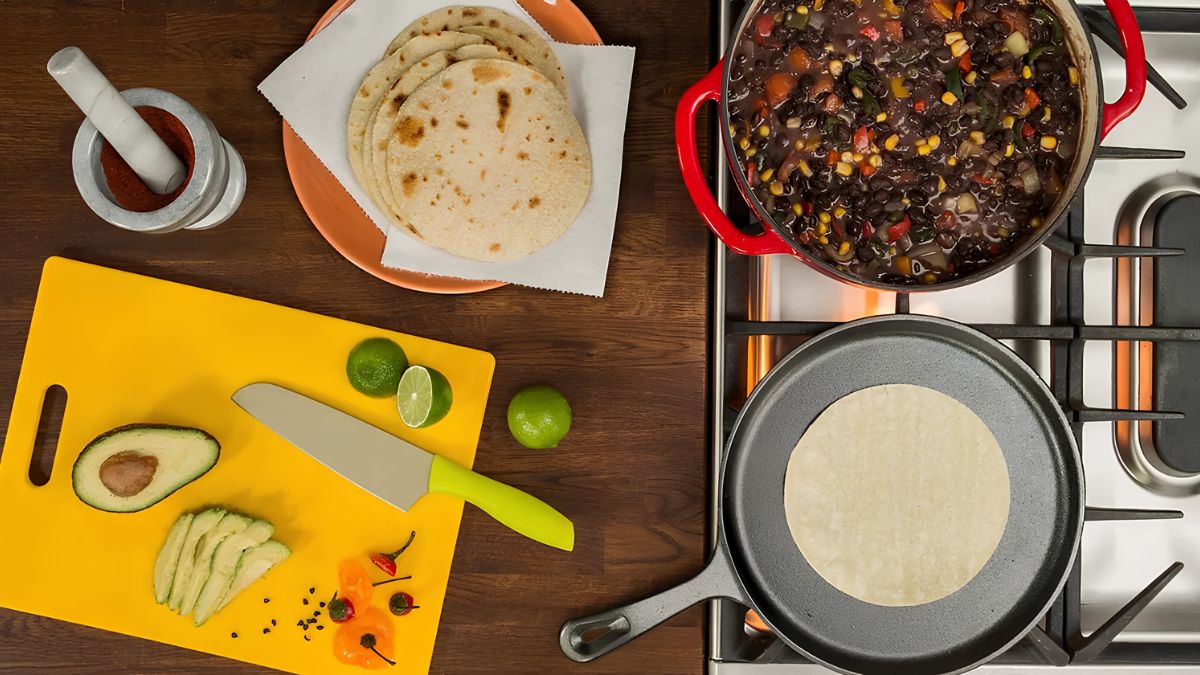
Corn tortillas can serve as the foundation for tacos and quesadillas. Tomatoes and onions work well in fresh salsa, while roasted chilies add a different flavor profile. Beans provide a filling vegetarian option, and lime juice can brighten grilled meats, vegetables, and sauces.
The following table outlines a basic shopping list and its possible uses.
| Ingredient | Suggested use |
|---|---|
| Corn tortillas | Mini tacos and quesadillas |
| Tomatoes | Fresh salsa and cooked sauces |
| White onions | Salsa, marinades, and taco toppings |
| Avocados | Guacamole |
| Limes | Marinades, dressings, and beverages |
| Cilantro | Salsas, garnishes, and sauces |
| Jalapeños or serrano chilies | Adjusting salsa heat |
| Black or pinto beans | Side dishes and vegetarian fillings |
| Chicken or beef | Grilled taco fillings |
| Cumin and Mexican oregano | Seasoning meats, beans, and vegetables |
| Cotija or queso fresco | Toppings for corn and other dishes |
| Mexican crema | A finishing sauce for tacos and vegetables |
Ingredient substitutions are possible when specialist products are unavailable. Regular oregano can replace Mexican oregano, although the flavor differs slightly. Feta may substitute for cotija in some preparations, while sour cream thinned with a little milk or lime juice can approximate the consistency of crema.
For a more informed approach to ingredient selection, the Smithsonian National Museum of the American Indian’s resources on Native food traditions provide educational context for Indigenous cultures and foodways. Corn, beans, and squash have long histories in Indigenous agricultural systems across the Americas, although their uses vary between communities.
Tacos
Tacos are a practical centerpiece for a Mexican food tasting because they can accommodate different fillings and are easy to serve in small portions. Preparing two or three varieties gives guests an opportunity to compare seasoning, texture, and cooking methods.
Grilled chicken can be seasoned with garlic, cumin, chili powder, lime juice, and a small amount of oil. Beef can be prepared with a similar seasoning mixture or cooked slowly until tender. For a vegetarian alternative, sautéed mushrooms, peppers, onions, or seasoned beans provide substantial fillings.
Allow the ingredients to absorb their seasonings before cooking, particularly when using a marinade. Chicken should be cooked thoroughly, while beef should be prepared according to the cut and the intended recipe.
Corn tortillas are generally a suitable choice for a tasting menu. Warm them in a dry skillet shortly before serving, turning them as needed to soften them without making them brittle. Keep the warmed tortillas covered with a clean towel.
Serve the fillings in separate bowls with chopped onion, cilantro, lime wedges, and salsa. Guests can then assemble their own tacos, making it easier to accommodate different preferences.
For additional information about Mexican culinary heritage and its regional variations, UNESCO’s resource on traditional Mexican cuisine offers useful context. The dishes served at home can draw inspiration from these traditions without being presented as definitive examples of San Ysidro’s food culture.
Salsas
Salsas provide contrast to the richness of grilled meats, cheese, and beans. Offering two or three varieties can also introduce guests to different combinations of acidity, heat, freshness, and roasted flavors.
Pico de gallo is a fresh preparation made with diced tomatoes, white onion, cilantro, lime juice, and finely chopped jalapeño. Add salt gradually and taste before serving. This salsa works well with tacos, quesadillas, and grilled vegetables.
Salsa roja can be made by roasting tomatoes, garlic, onion, and chilies until softened and lightly charred. Blend the ingredients with salt and a small amount of water if needed. Roasting creates a deeper flavor than using the same ingredients raw.
Salsa verde typically uses tomatillos, which have a tangy flavor. Cook them until softened, then blend with onion, garlic, cilantro, and chilies. Adjust the consistency with a little water and season to taste.
The heat of each salsa depends on the chilies used and how much is added. Removing some seeds and inner membranes may reduce the heat, although it will not eliminate it completely.
Place each salsa in a separate bowl and label it as mild, medium, or hot. Keep fresh preparations refrigerated until needed, and avoid preparing more than the group is likely to consume.
Streetfood
Street-food-inspired dishes can introduce additional textures and cooking methods to a home tasting. Grilled corn, quesadillas, and guacamole are accessible options that can be prepared with ingredients available at many supermarkets.
Mexican-style street corn, commonly known as elote, is made by grilling corn and adding a creamy coating, cheese, chili seasoning, and lime. For a tasting menu, cut the corn into smaller sections after cooking so that each guest receives a manageable serving.
Quesadillas offer another straightforward option. Place cheese and a filling such as mushrooms, beans, or sautéed peppers inside a tortilla, then cook it in a skillet until the tortilla is lightly crisp and the cheese melts. Cut the finished quesadilla into wedges before serving.
Guacamole can be prepared by mashing ripe avocados with lime juice, salt, diced onion, and cilantro. Some versions include tomato or chili, while others keep the ingredient list relatively simple. There is no single preparation that represents every Mexican household.
Prepare guacamole shortly before serving to preserve its fresh flavor and reduce browning. Cover any remaining portion and refrigerate it promptly.
These dishes can be arranged on a shared platter, with small bowls of salsa and lime wedges nearby. The arrangement allows guests to sample several items without requiring a separate plate for every preparation.
Vegetables
Vegetable dishes help balance a tasting menu that includes grilled meat, cheese, and tortillas. They also provide options for guests who do not eat meat.
Bell peppers, zucchini, mushrooms, onions, and squash can be grilled or roasted with a small amount of oil, salt, and ground spices. Cook the vegetables until tender while retaining some texture. A squeeze of lime and a little chopped cilantro can be added immediately before serving.
Beans are another useful component. Black or pinto beans can be simmered with onion, garlic, and suitable seasonings. They can be served whole or partially mashed, depending on the intended texture.
For a more complete vegetarian menu, use beans and vegetables as taco fillings, then provide cheese and dairy-based sauces separately. This makes it easier for guests to choose appropriate combinations.
Hosts should also check ingredient labels when accommodating food allergies or dietary restrictions. Some packaged seasonings and sauces contain unexpected ingredients, and shared utensils can introduce cross-contact concerns.
Beverages
Beverages can complement the food and provide relief from spicy seasonings. Agua fresca, horchata, and sparkling water with lime are suitable options for a home tasting.
Agua fresca can be prepared by blending watermelon, pineapple, or cucumber with water and lime juice. Strain the mixture if a smoother texture is preferred, then sweeten lightly if necessary. Refrigerate it before serving.
Horchata is a sweet, rice-based beverage commonly flavored with cinnamon. Recipes vary, but many involve soaking rice, blending it with water, straining the mixture, and adding milk or a suitable alternative along with sugar and cinnamon.
For guests who prefer a simpler option, serve chilled water with lime wedges. This also helps balance the stronger flavors of chilies and grilled foods.
Prepare drinks in pitchers and provide serving glasses separately from the food. If the tasting includes alcoholic beverages, offer nonalcoholic alternatives as well and serve alcohol responsibly.
Preparation
A preparation schedule helps reduce the amount of work required immediately before guests arrive. Several components, including marinades, cooked beans, and some salsas, can be prepared in advance.
| Time | Preparation task |
|---|---|
| One day before | Purchase ingredients and prepare marinades |
| Morning of the event | Make suitable salsas and refrigerate them |
| Two hours before | Wash vegetables and prepare toppings |
| One hour before | Cook beans, roast vegetables, and prepare drinks |
| Thirty minutes before | Cook taco fillings and reheat suitable side dishes |
| Just before serving | Warm tortillas and finish fresh toppings |
Food safety should remain part of the schedule. Refrigerate perishable foods promptly, keep raw meat separate from ready-to-eat ingredients, and use clean utensils for serving.
As a general guideline, perishable food should not remain at room temperature for more than two hours, or more than one hour when the ambient temperature exceeds 90°F (32°C). Use a food thermometer to verify that meat reaches a safe internal temperature appropriate to the type of meat and preparation.
Avoid preparing every dish at the same time. Completing the components that hold well in advance leaves more room for cooking tortillas and finishing the items that benefit from being served fresh.
Presentation
Presentation can make a tasting menu easier to navigate without requiring elaborate decorations. Use separate bowls for fillings, salsas, and toppings, and arrange dishes so that guests can move comfortably between them.
Small labels can identify each dish and list its principal ingredients. Indicating whether a salsa is mild or hot can also help guests make informed choices.
For a more structured experience, serve the food in stages. Begin with guacamole and small vegetable-based dishes, continue with tacos and quesadillas, and finish with beverages or a simple dessert. Alternatively, place everything on a shared table for a more informal gathering.
The presentation can also introduce some cultural context. Brief descriptions of ingredients, preparation techniques, and regional differences encourage guests to understand the food beyond its appearance. San Ysidro’s border location offers a relevant starting point for discussing how culinary practices develop through migration, trade, family traditions, and contact between communities.
Avoid describing a collection of popular Mexican dishes as exclusively representative of San Ysidro unless their local connection has been established. A home tasting can be inspired by the area’s broader border-region setting while acknowledging that individual recipes and preferences differ.
A successful Mexican food tasting depends on a manageable menu, fresh ingredients, suitable preparation, and clear presentation. A few carefully prepared taco fillings, contrasting salsas, vegetable dishes, and refreshing drinks can provide plenty of variety without making the event unnecessarily complicated. By combining practical planning with an appreciation of Mexican culinary diversity, hosts can create a meal that is both enjoyable and informative.
FAQs
What foods suit a Mexican tasting menu?
Mini tacos, quesadillas, elote, guacamole, beans, and assorted salsas are suitable choices.
Which ingredients should I buy first?
Start with corn tortillas, tomatoes, onions, avocados, limes, cilantro, beans, and chilies.
How can I make the menu vegetarian?
Serve bean tacos, grilled vegetables, mushroom quesadillas, and fresh salsa.
Which drinks pair well with Mexican food?
Agua fresca, horchata, and sparkling water with lime are useful options.
Can I prepare the dishes ahead of time?
Yes. Prepare suitable salsas, marinades, beans, and chopped toppings in advance.