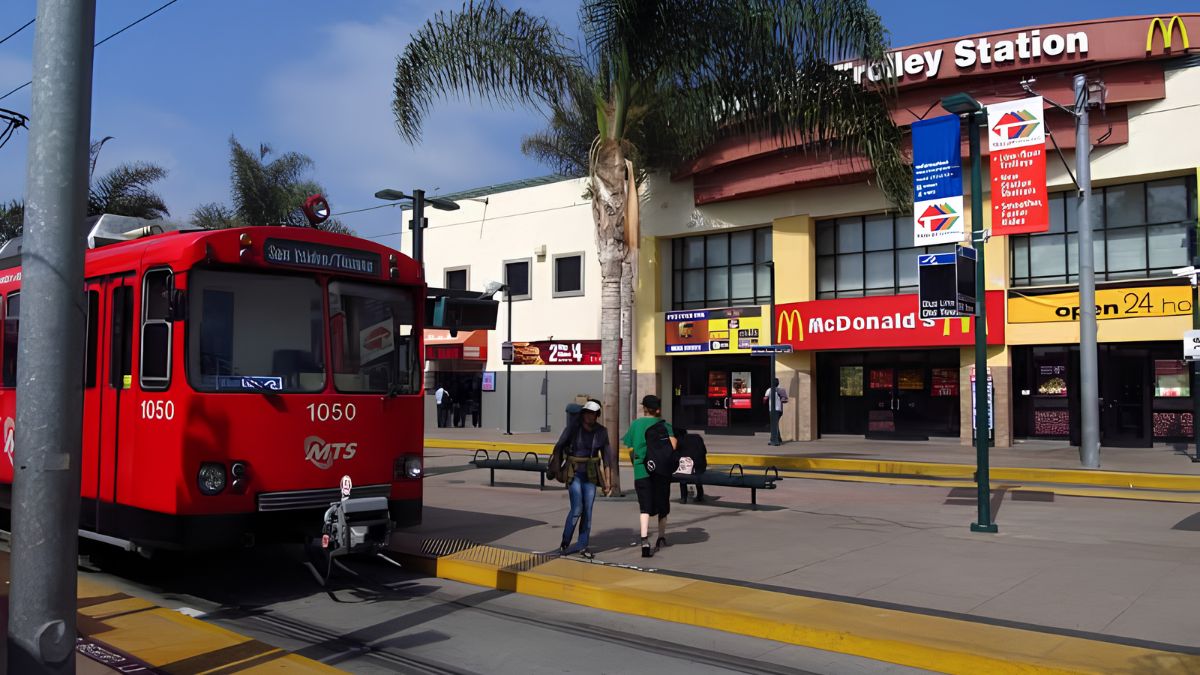
A neighborhood’s architectural character tells a story about how people have lived, worked and built their community over time. In San Ysidro, California, studying buildings can reveal changing housing needs, commercial activity, transportation patterns and the area’s relationship with the U.S.-Mexico border. Yet understanding that history requires more than looking at a building and guessing how old it might be.
An older building is not automatically historically significant, just as a newer structure is not necessarily without cultural value. A modest home, a neighborhood storefront or a community gathering place may help explain an important part of local history even if it has no elaborate architectural details. Meanwhile, a building that looks old may have been substantially remodeled, reconstructed or moved from another location.
For residents, students, researchers and local history enthusiasts, the key is to separate observable building age from documented historical significance. By combining architectural observation with reliable records, San Ysidro’s built environment can be studied more accurately and respectfully.
Context
San Ysidro is a community in southern San Diego, close to the international border with Tijuana. Its location has shaped its development, including residential growth, commercial activity, transportation and cross-border connections. These influences provide an important starting point for studying local architecture.
Rather than treating every building as an isolated object, researchers can consider how structures fit into the wider neighborhood. A building’s location near a major road, commercial corridor, transit connection or community institution may help explain its original purpose and subsequent changes.
The surrounding landscape also matters. Street layouts, parcel sizes, building setbacks, storefront arrangements and the relationship between homes and businesses can reveal patterns of development. These features may provide useful clues even when a property’s exact construction date is unknown.
However, context should guide investigation rather than replace evidence. A building near an old transportation route is not automatically historic, and a property in a changing commercial district does not necessarily have a direct connection to a particular historical event. Researchers should establish those connections through documentation whenever possible.
Age
Building age refers to when a structure was constructed. Historical significance concerns why that structure matters. These are related questions, but they are not interchangeable.
A building’s age may be estimated from property records, construction permits, historical maps, photographs, architectural features and other documentation. The date may remain uncertain if records are incomplete or if the structure has undergone substantial changes.
Historical significance requires a different assessment. Researchers may ask whether the building is associated with an important person, event, community tradition, architectural style or period of development. They may also examine whether it represents a distinctive example of local building practices or contributes to the character of a historic district.
Consider three hypothetical examples:
- An older residence may have limited documented historical associations but still illustrate an early residential pattern.
- A relatively recent community building may be significant because it became an important gathering place for local residents.
- A historic-looking storefront may have a newer façade covering an older structure, making its visible appearance an unreliable indicator of age.
These examples show why researchers should avoid treating age as a shortcut for significance. Both questions deserve separate investigation.
Architecture
Architectural character includes the physical features that shape a building’s appearance and function. These can include its overall form, roofline, windows, doors, exterior materials, decorative elements and relationship to the street.
When studying a building in San Ysidro, start with what can actually be observed. Is the structure one story or several? Does it have a flat, pitched or otherwise distinctive roof? Are the windows arranged symmetrically? Does the entrance face the street? Is there a porch, courtyard, storefront or side addition?
Record these features without immediately assigning a construction date or architectural style. A building may combine features from different periods because of additions, renovations or changes in use.
Materials can also provide clues, but they should be interpreted cautiously. Concrete block, stucco, brick, wood siding and metal components have been used across many decades. Their presence alone cannot establish a reliable construction date.
A useful architectural description separates observation from interpretation. For example, writing that a building has a stucco exterior, a low-pitched roof and a recessed entrance describes visible evidence. Calling it a particular historic style is a further conclusion that should be supported by distinctive features and, where possible, specialist guidance.
Evidence
Reliable historical research combines several sources rather than depending on a single clue. Each record type answers different questions, and disagreements between sources may reveal changes in the property over time.
| Source | What it can help establish | Important limitation |
|---|---|---|
| Building permits | Documented construction or alterations | Older records may be incomplete |
| Assessor records | Ownership, parcel and property details | Assessment dates may not equal construction dates |
| Historic maps | Building footprints and neighborhood development | Maps may not show every structure |
| Old photographs | Exterior appearance at a particular time | Photograph dates or locations may be uncertain |
| City directories | Occupants, businesses and addresses | Entries may omit properties or residents |
| Oral histories | Community memories and building uses | Recollections may differ or lack exact dates |
The strongest conclusions usually emerge when several independent sources support the same interpretation.
For example, an old photograph may show a storefront that resembles a present-day building. A historical map may place a structure on the same parcel, while permits may document a later addition. Together, these sources can help distinguish the age of the original building from the age of its current exterior.
Researchers should also keep track of uncertainty. If a record confirms that a building existed by a certain year but does not establish its construction date, it is more accurate to say that the building was present by that date than to claim it was built then.
Records
For properties in San Ysidro, official municipal and county records can provide a starting point for verifying dates, ownership history and alterations.
The City of San Diego provides information about city services, planning and development. Its relevant departments may help researchers identify building permit records, planning documents or historic preservation resources.
The San Diego County Assessor/Recorder/County Clerk provides property-related and recorded-document information. Researchers should check which records are available for the specific property and whether access requires an application, fee or in-person visit.
The San Diego History Center is another valuable resource for exploring regional history through photographs, archival collections and historical materials. Its collections may help place a building within a broader story of neighborhood development.
When searching, use the property’s current address and, where available, its parcel number. Historical addresses may differ from modern ones, so consider checking nearby streets, former business names and older maps if the first search produces little information.
A lack of easily accessible records does not prove that a building has no historical significance. It may simply mean that the relevant documents are held in another collection, have not been digitized or require more detailed research.
Alterations
Buildings rarely remain unchanged throughout their lives. Owners may replace windows, add rooms, enclose porches, update façades, convert residences into businesses or adapt older structures for new uses.
These changes complicate attempts to determine age from appearance alone. A building may retain its original structure while displaying newer materials, or it may preserve a historic-looking façade despite substantial reconstruction behind it.
Researchers should distinguish between the original building, later additions and recent exterior treatments. Comparing dated photographs with current observations can help identify changes. Permit records and historic maps may provide further evidence about when those alterations occurred.
It is also important not to assume that every alteration reduces historical value. Some changes may document how a neighborhood adapted to new residents, businesses or practical needs. In certain cases, later additions become part of the building’s history.
The goal is to establish a clear timeline rather than decide immediately whether a building is authentic or inauthentic. Architectural character often reflects multiple periods of use, not just the moment of original construction.
Significance
Historical significance can be assessed through several different lenses. A building may be notable for its architectural design, connection to a documented event, association with a community figure or role in a broader pattern of neighborhood development.
Community value deserves consideration, too. A modest building that hosted important local meetings or served generations of residents may have meaning that is not obvious from its physical appearance. Establishing that value requires evidence such as photographs, oral histories, newspapers, organizational records or other documentation.
Researchers should avoid making unsupported claims about cultural or historical associations. A building’s proximity to a border crossing, school or historic route does not by itself establish a direct connection to the people or events associated with that place.
It is also helpful to distinguish personal interest from formal recognition. A resident may reasonably regard a family home as an important part of local history, while formal designation may require specific documentation and evaluation criteria. Both perspectives can be valuable, but they answer different questions.
For a more structured approach, consult the National Register of Historic Places, administered by the National Park Service. Its guidance explains how historic properties are evaluated and documented. Listing or eligibility depends on established criteria; age alone is not enough.
Fieldwork
A simple field survey can help students and community researchers document architectural character consistently. Before visiting a site, identify the research question and gather any available maps or records.
During the visit, record the address, date of observation, building form, visible materials, roof shape, openings, entrances and relationship to neighboring structures. Take photographs from publicly accessible locations where permitted, and note any visible additions or alterations.
Separate factual observations from hypotheses. For example:
- Observation: The storefront has a recessed entrance and a flat roof.
- Hypothesis: The design may reflect a commercial building tradition common in a particular period.
- Evidence needed: Historical photographs, construction records or comparable documented buildings.
This approach makes it easier to revise an interpretation when new information becomes available.
Respect property boundaries and residents’ privacy. Do not enter private property without permission, photograph people in ways that intrude on their privacy or assume that an unoccupied-looking structure is abandoned. If a building appears unsafe, observe it from a safe public location rather than approaching unstable areas.
Researchers should also document the limits of their survey. A short exterior visit cannot establish a property’s full construction history or legal preservation status.
Comparison
Comparing several buildings can reveal neighborhood patterns that might be missed when studying one property alone. Choose a small group of structures with a clear reason for comparison, such as their location on the same street, similar use or documented construction period.
Record each building using the same categories. Consistent observations make differences easier to identify and reduce the risk of judging one property more favorably simply because it has more decorative details.
A comparison might show that several buildings share similar setbacks or roof forms, while others reflect later redevelopment. Such patterns can suggest how a street evolved, although records are still needed to confirm dates and explain causes.
Avoid assuming that a building is more significant because it is larger, older-looking or more elaborate. Small-scale residential and commercial buildings can offer important evidence about everyday life, local economies and changing household needs.
Interpretation
The final stage is to bring observations and records together into a balanced explanation. A useful report should describe the building, summarize the available evidence, explain the historical context and identify what remains uncertain.
Use precise language. If a construction date is confirmed by a reliable record, cite that evidence. If the date is estimated from architectural features, label it as an estimate. If a historical association is suggested by an oral account but not independently verified, explain that limitation.
Avoid calling a property officially historic unless its recognition or designation has been verified through an authoritative source. Likewise, do not describe a building as insignificant simply because it lacks a formal listing or a clear architectural style.
San Ysidro’s architectural character is best understood as part of a changing community rather than a collection of old structures. Buildings can preserve evidence of development, migration, business activity, family life and changing design preferences. Careful research helps reveal these connections without confusing visible age with proven historical importance.
By combining field observations, archival sources, official records and community knowledge, researchers can create a more accurate picture of the area’s built environment. The result is not only a better understanding of individual buildings, but also a richer account of how San Ysidro has developed over time.
FAQs
Does an older building automatically have historic significance?
No. Significance depends on documented historical, cultural or architectural value.
How can I verify a building’s age?
Check permits, assessor records, historic maps and dated photographs.
Can a newer building be historically important?
Yes. Its community role or historical associations may make it significant.
Where can I research San Ysidro buildings?
Start with city records, county property resources and local history archives.
Do architectural features prove a construction date?
No. Features provide clues but should be checked against documentary evidence.