A community’s history is often found in more than official records or old newspaper articles. It lives in family photographs, memories of familiar streets, stories about local businesses, and the experiences of people who have watched their neighbourhood change over decades. In San Ysidro, California, documenting these personal accounts can help preserve the everyday details that might otherwise disappear as generations grow older and the community continues to evolve.
Creating a record of local history does not require professional equipment or specialised training. Residents can begin with conversations, photographs, family documents, and memories shared by longtime neighbours. The most important elements are careful listening, accurate documentation, respect for people’s privacy, and a commitment to preserving stories responsibly.
Whether you are building a family archive, preparing a school project, or contributing to a community history collection, a thoughtful approach can help turn individual memories into a valuable record of San Ysidro’s past.
Purpose
Before collecting material, decide what you want your history project to document. A broad project might explore how San Ysidro has changed over several generations, while a smaller one could focus on family businesses, local celebrations, schools, neighbourhood gathering places, or everyday life near the United States-Mexico border.
A clear purpose helps you decide whom to interview and what materials to collect. For example, a project about changing shopping habits might include interviews with longtime residents, photographs of former storefronts, and memories of how families bought food or household essentials.
You could also explore how people travelled to work, where children played, how neighbours supported one another, or which community events brought families together. Ordinary experiences can reveal important details about social relationships, work, culture, and local identity.
Keep the scope manageable at first. Documenting three residents’ experiences in detail may produce a stronger result than collecting dozens of brief, poorly organised accounts. You can expand the project as new contacts and materials become available.
Interviews
Oral interviews are one of the most direct ways to preserve personal memories. A conversation with a longtime resident can provide details about a place, event, or way of life that may not appear in written records.
Begin by identifying people who are willing to share their experiences. They might include older residents, former business owners, teachers, community volunteers, local workers, or people whose families have lived in San Ysidro for several generations. Do not assume that only older people have valuable stories. Newer residents can also document recent changes and explain how they experience the community today.
Arrange a convenient time and explain the project’s purpose before recording anything. Let participants know whether their words may be published, shared online, or kept in a private archive.
Prepare open-ended questions that encourage detailed answers. Instead of asking whether a street used to be busy, ask what a typical day there looked like when the person was younger. Follow-up questions can help clarify dates, locations, names, and the sequence of events.
Possible questions include:
- What do you remember most clearly about growing up in San Ysidro?
- Which local places were important to your family?
- How have shops, streets, or public spaces changed?
- What celebrations or traditions brought neighbours together?
- What do you wish younger generations knew about the community?
Allow interviewees to tell stories in their own words. Avoid interrupting unnecessarily or steering them toward a particular conclusion. If a memory is uncertain, record that uncertainty rather than trying to force a precise answer.
Preparation
A little preparation can make an interview more comfortable and productive. Arrange a quiet location, check your recording equipment, and bring a notebook for names, dates, and details that may need follow-up.
A smartphone can often record usable audio, provided it is placed close enough to capture clear speech and background noise is limited. Test the recording before the interview begins and make sure the device has sufficient battery power and storage.
Ask permission before recording. Explain whether you plan to keep the audio, create a written transcript, or publish selected excerpts. If the participant prefers not to be recorded, take notes instead.
Avoid making the conversation feel like a formal examination. Some people may remember events gradually as they talk. A family photograph, an old letter, or a familiar place name can help prompt memories, but let the participant decide which subjects they wish to discuss.
After the interview, label the file with a consistent name and record the interview date, participant’s preferred name, general subject, and any agreed restrictions. These basic details will make the material easier to find later.
Photographs
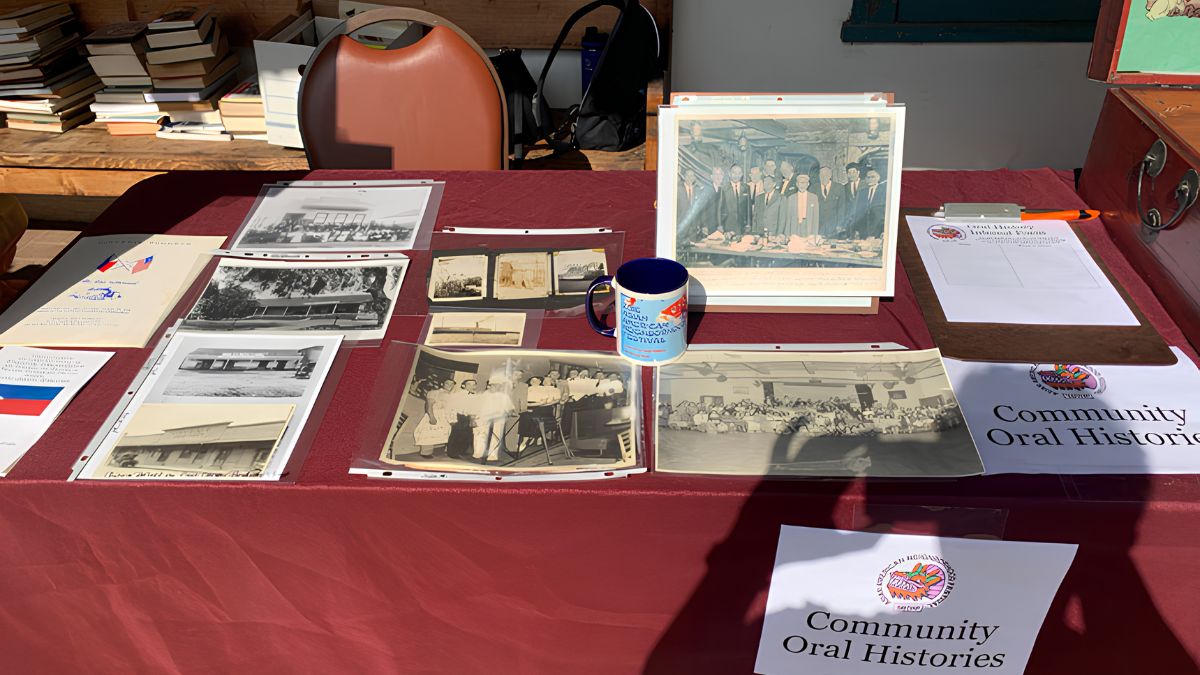
Family photographs can reveal how people lived, dressed, travelled, celebrated, and used local spaces. A single image of a family gathering might document clothing, food, furniture, relationships, and the appearance of a home at a particular time.
When collecting photographs, ask owners to explain what they know about each image. Record the names of people shown, the approximate date, the location, and the event if known. Ask who took the photograph when that information is available.
Avoid guessing details from appearance alone. If the date or location is uncertain, label it as approximate or unknown. A caption such as “Family gathering in San Ysidro, probably during the 1970s, according to the donor” is more reliable than presenting an uncertain date as fact.
Original photographs should be handled carefully. Keep them away from food, liquids, direct sunlight, and unnecessary handling. If scanning is appropriate, use a suitable scanner or ask a local archive or library whether it offers digitisation guidance.
Digital copies should retain as much detail as possible. Save a high-quality master file and create smaller copies for websites or presentations. Do not write on the back of fragile photographs or use adhesive labels directly on the image surface.
Stories
Memories often become more meaningful when connected to places and everyday experiences. Residents might recall a former shop, a favourite gathering place, a school activity, a local celebration, or the way neighbours helped one another during difficult times.
These stories can help explain how the community functioned beyond what maps and official documents reveal. A photograph might show a building, but an interview could explain why people gathered there, who operated it, and what role it played in daily life.
Record stories with their context. Note who told the story, when the conversation took place, and whether the account is based on personal experience or something the person heard from relatives. This distinction matters because memories passed down through generations may change in the telling.
Different people may remember the same event differently. Rather than treating every disagreement as a problem to solve, document the differences and look for additional sources when accuracy is important. Community history can include conflicting perspectives, particularly when people experienced an event from different positions.
Personal stories should not be treated as proof of every factual detail. Use them alongside photographs, newspapers, maps, public records, and other available material where possible.
Verification
Historical documentation becomes more useful when its claims can be checked. Memories are valuable, but dates, addresses, names, and sequences of events may become confused over time.
When a resident mentions a former business or a major neighbourhood change, look for supporting material. Old directories, newspaper archives, public meeting records, historic maps, school publications, and family documents may help establish context.
Local libraries and historical organisations can be useful starting points for discovering existing collections. The San Diego Public Library’s website, for example, provides information about library services and resources at https://www.sandiego.gov/public-library. Ask library staff whether relevant local-history materials or research guidance are available.
Keep track of where each detail came from. A simple research note might identify an interview date, the name of a photograph’s owner, or the publication in which a historical event was reported.
Separate confirmed information from personal recollection. If a participant remembers that a building was demolished in a particular decade but no supporting record has been found, describe it as their recollection rather than a verified date.
Accuracy does not require removing personal emotion from a story. It means making clear which details are documented, which are remembered, and which remain uncertain.
Consent
Respect and consent should guide every stage of the project. A person who agrees to an interview has not necessarily agreed to have their photograph, voice, or personal story published publicly.
Explain how the material may be used and ask for permission appropriate to the intended purpose. If you plan to publish recordings, photographs, or transcripts online, make that clear before collecting them.
Ask how participants want to be identified. Some may be comfortable using their full names, while others may prefer a first name, a pseudonym, or anonymity. Respect requests to avoid particular subjects or withhold sensitive details.
Be especially careful with photographs containing children, private family information, or people who have not agreed to public sharing. Consider whether publication could reveal sensitive information or cause harm to someone shown in the image.
Ownership also matters. A person may own a physical photograph without necessarily owning the copyright to it. Before reproducing images publicly, establish who holds the relevant rights and obtain the necessary permission.
Keep a written record of permissions and any restrictions on use. If a participant later asks you to limit access to their material, review the original agreement and discuss what can reasonably be changed.
Preservation
Once the material has been collected, organise it so that future readers can understand and use it. A folder system can separate interviews, photographs, transcripts, research notes, and permission records.
Use clear filenames that include a date or short description, while avoiding unnecessary personal information. Maintain a separate index listing the creator or contributor, location, approximate date, subject, and any access restrictions.
Digital files should have backups. Keep copies in more than one secure location, such as an external drive and a trusted backup service. Check occasionally that important files still open and that the backups are current.
Preserve original recordings and photographs when possible, even if you create edited versions for a presentation. Editing can make material easier to share, but retaining the original helps protect its context and allows future researchers to review it.
For physical materials, choose a dry, stable storage location away from direct sunlight and excessive heat. If the collection grows, consider asking an archive or library for advice about suitable preservation methods.
Sharing
A community history project can be shared in many ways. A small exhibition, a printed booklet, a family-history website, a school presentation, or a collection of recorded interviews can help make the material accessible to others.
Choose a format that suits the participants and the intended audience. Some residents may prefer printed copies, while others may enjoy listening to short audio clips or viewing scanned photographs with captions.
Make captions informative and respectful. Identify people and places where the information is known, describe uncertainty honestly, and avoid presenting one person’s experience as the experience of every resident.
Consider creating a copy for the person who contributed the material. Sharing a transcript or digitised photograph can help participants preserve their own family history while strengthening trust in the project.
If you want to donate material to an established organisation, contact it first to learn about its collection policies, preferred file formats, ownership requirements, and access rules. Not every organisation can accept every item, and agreeing on terms beforehand helps avoid misunderstandings.
Documenting San Ysidro’s community history begins with something simple: asking people what they remember and taking the time to preserve their answers carefully. Oral interviews, family photographs, and everyday stories can reveal how the community has changed and what residents have valued across generations. By verifying details, respecting privacy, organising files, and sharing material responsibly, individuals and families can create a record that future generations can learn from and continue to build upon.
FAQs
How can I record San Ysidro’s local history?
Start with resident interviews, family photographs, and written memories.
What should I ask longtime residents?
Ask about daily life, local places, family traditions, and community changes.
How can I preserve old family photographs?
Store them carefully and create high-quality digital copies.
Should I get permission before publishing interviews?
Yes. Explain how recordings, photographs, and stories will be used.
How can I verify a historical memory?
Compare it with photographs, newspapers, maps, and available public records.