
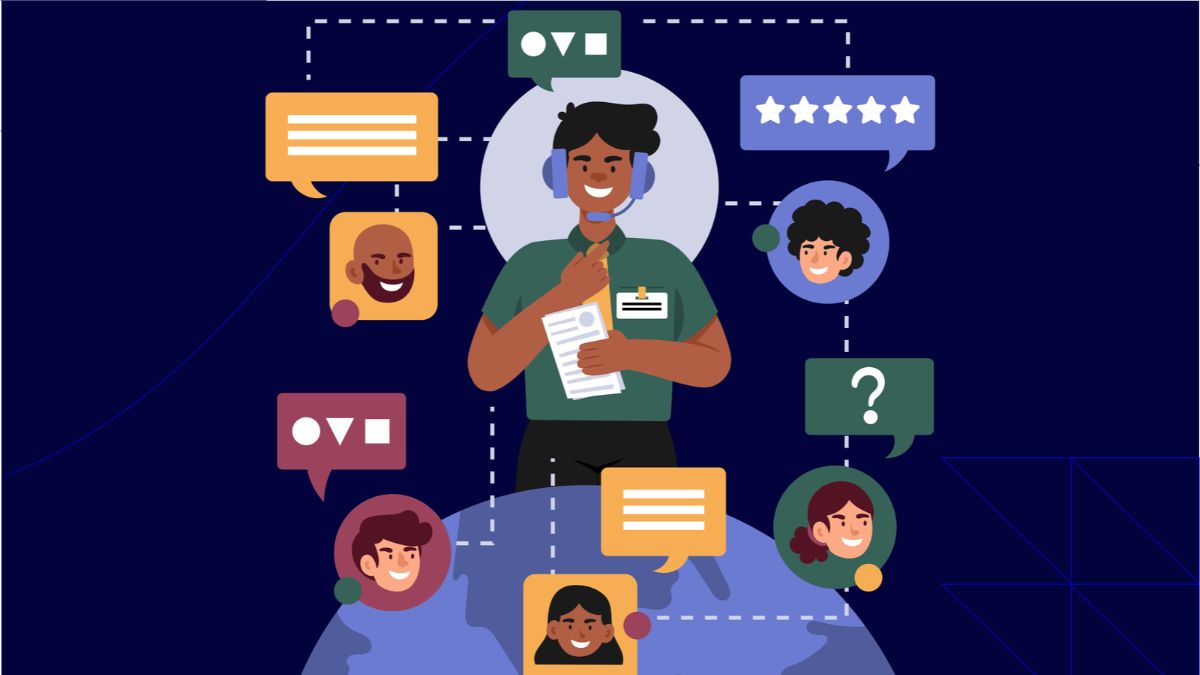
San Ysidro is a border community in southern San Diego where retail stores, restaurants, hospitality providers, and service businesses regularly interact with customers who have different language preferences. In this environment, the ability to communicate clearly can influence how customers understand prices, compare products, resolve complaints, and make purchasing decisions.
For many businesses, Spanish-English communication is an important part of daily operations. However, effective multilingual customer service involves more than hiring bilingual employees or displaying translated signs. Frontline staff also need practical training in listening, explaining policies, handling misunderstandings, and recognizing when professional language assistance is necessary.
A structured training program can help businesses improve service consistency while giving employees clear guidance for customer interactions. It can also help managers identify communication problems before they affect customer satisfaction or business operations.
For San Ysidro retailers and service providers, the objective is straightforward: ensure customers can obtain accurate information, know their options, and receive respectful assistance regardless of their preferred language.
1. Assess
Before introducing multilingual customer service training, business owners should understand which languages their customers use and where communication difficulties occur.
A clothing store may receive frequent questions about sizes, discounts, exchanges, and refunds. A restaurant may need employees to explain menu ingredients, food allergies, and ordering procedures. An automotive service provider may need to describe repair estimates, appointment availability, and payment arrangements.
These interactions require different vocabulary and levels of explanation. Training should therefore reflect the actual responsibilities of each employee rather than follow a generic language course.
Managers can begin by reviewing customer feedback, complaint records, frequently asked questions, and employee observations. Short discussions with frontline staff can reveal situations in which customers regularly request clarification or employees struggle to explain a policy.
Businesses should also identify the languages most frequently requested by their customers. Spanish and English may be priorities for many San Ysidro businesses, but the appropriate language mix will depend on the individual customer base.
The findings can be used to create a training plan that focuses on common interactions, important business information, and situations that require additional support.
2. Prioritize
Employees do not necessarily need advanced fluency in every language to provide useful assistance. They do, however, need to understand the limits of their language skills and communicate essential information accurately.
A practical training program should begin with common customer enquiries.
Retail employees can practice explaining prices, promotional offers, product availability, payment methods, and return policies. Restaurant staff can learn how to discuss menu items, ingredients, and special requests. Service employees can practice explaining appointments, estimated costs, service procedures, and expected completion times.
Managers should prepare bilingual reference sheets containing commonly used phrases and approved explanations of business policies.
For example, employees handling Spanish-English interactions can practice the following expressions:
- “How can I help you?” – “¿Cómo puedo ayudarle?”
- “Could you repeat that, please?” – “¿Podría repetirlo, por favor?”
- “Let me check that for you.” – “Permítame verificarlo.”
- “One moment, please.” – “Un momento, por favor.”
- “Would you prefer to speak in English or Spanish?” – “¿Prefiere hablar en inglés o en español?”
The goal is to help employees use these phrases naturally while understanding their meaning. Staff should not rely on memorized expressions when they cannot understand the customer’s response.
Training materials should also distinguish between information employees can explain independently and questions that must be referred to a supervisor or qualified language professional.
3. Practice
Language instruction becomes more useful when employees can apply it to realistic customer situations. Role-playing exercises allow staff to practice communication without the pressure of an actual transaction.
A manager might ask one employee to play a customer requesting a refund while another explains the store’s return policy. Another exercise could involve a restaurant customer asking about ingredients or a service customer seeking clarification about an estimate.
Employees should practice switching between languages when appropriate, asking follow-up questions, and confirming that they have understood the request.
For example, if a customer describes a product problem that an employee does not fully understand, the employee should avoid guessing. Instead, they can ask the customer to explain the issue again, use simpler language, or request assistance from a bilingual colleague.
Short, regular exercises can be incorporated into existing team meetings. A 10- to 15-minute session can focus on one customer scenario, allowing employees to repeat the exercise and receive feedback.
Managers should assess both language accuracy and service behavior. Employees need to remain polite, explain the next steps, and avoid making promises they cannot fulfill.
Practice should also cover difficult interactions, including disagreements about charges, delayed orders, unavailable products, and misunderstandings about business policies.
4. Listen
Effective multilingual customer service depends on listening as much as speaking. Employees who concentrate only on finding the right words may overlook important details in a customer’s request.
Training should encourage staff to let customers finish explaining their concerns, speak at a comfortable pace, and use straightforward language. Slang, unfamiliar abbreviations, and technical terms can make an already difficult conversation harder to follow.
Employees should learn to confirm important details before taking action. When processing a return, for example, they can repeat the product name, purchase date, and requested resolution. When arranging a service appointment, they should confirm the date, time, location, and any relevant instructions.
These habits can reduce avoidable errors, particularly when a conversation involves money, product specifications, or service commitments.
Managers should also explain that language preference must not be assumed from a customer’s appearance, accent, or perceived background. Employees can simply ask which language the customer prefers to use.
Businesses can reinforce these practices through observation and feedback. Supervisors might review a sample customer interaction, identify where communication became unclear, and suggest a more effective way to explain the information.
Listening skills are particularly important when customers are frustrated. An employee who acknowledges a concern and asks relevant questions can often establish a clearer path toward resolution without escalating the disagreement.
5. Support
Even experienced employees will sometimes encounter questions that exceed their language skills. Businesses need a consistent process for obtaining assistance when this happens.
One practical option is to identify bilingual employees who are willing and qualified to help colleagues. Managers can establish a simple escalation process that specifies whom staff should contact, how assistance should be requested, and how the customer should be informed about any delay.
Bilingual reference materials can also support routine enquiries. These might include opening hours, payment procedures, return conditions, appointment instructions, and frequently requested product information.
The materials should be reviewed regularly to ensure that translations remain accurate when policies change. Managers should avoid relying on informal translations of important legal, financial, or contractual information.
Translation applications can help employees understand basic questions, but they should not be treated as a complete replacement for qualified language support. Errors may affect the meaning of instructions, particularly when conversations involve specialized terminology or sensitive information.
For healthcare-related services, legal matters, and other high-stakes interactions, businesses should determine whether a qualified interpreter or an appropriate professional language service is needed.
Employees should also understand their authority. If a customer asks for an exception to a return policy or disputes a charge, the employee should explain the available options and involve an authorized supervisor when necessary.
6. Respect
Customers may have different communication preferences, expectations, and levels of familiarity with a business’s procedures. Training can help employees respond appropriately without relying on cultural assumptions.
For example, one customer may want a detailed explanation of a product warranty, while another may prefer a concise summary. Some customers may need additional time to understand an unfamiliar term or compare options before making a decision.
Staff should be encouraged to respond to these needs individually. They should not assume that everyone who speaks a particular language shares the same preferences or expectations.
Respectful service also includes avoiding comments about accents, correcting customers unnecessarily, or expressing frustration when someone requests clarification. Employees should focus on understanding the enquiry rather than judging how it is communicated.
Businesses can support these efforts with bilingual menus, translated notices, clear pricing information, and customer service instructions in commonly requested languages. Where feasible, information about returns, cancellations, fees, and service limitations should be available in accessible language before a transaction is completed.
There are also official resources that businesses can consult when developing their policies.
The U.S. Census Bureau’s QuickFacts provides demographic information that can help businesses understand the communities they serve. Managers should select the relevant geographic area and review available language and demographic indicators rather than assume that citywide figures accurately represent San Ysidro.
The U.S. Department of Justice’s Language Access resources provide information about language access and federal civil rights requirements in applicable settings. Businesses should determine which requirements apply to their particular services and circumstances.
For employment-related questions, the U.S. Equal Employment Opportunity Commission’s national origin discrimination guidance explains protections under federal employment law. Employers should review relevant guidance before introducing workplace language policies or requirements.
These resources provide useful starting points, but they serve different purposes. Demographic data can inform training priorities, while legal guidance helps organizations understand applicable responsibilities.
7. Measure
A training program should be evaluated against practical service outcomes. Attendance alone does not establish whether employees can communicate more effectively with customers.
Managers can track several indicators, including communication-related complaints, customer satisfaction, repeated enquiries, transaction errors, and the time required to resolve common problems.
Employee feedback is equally important. Frontline staff can identify phrases that customers frequently misunderstand, policies that are difficult to explain, and situations in which bilingual support is unavailable.
A simple evaluation framework can help businesses organize this information.
| Training area | Measurement method | Review frequency |
|---|---|---|
| Language skills | Practice exercises and scenario assessments | Monthly |
| Customer satisfaction | Feedback and service surveys | Monthly |
| Enquiry resolution | Records of resolved and escalated cases | Monthly |
| Employee confidence | Short staff questionnaires | Quarterly |
| Communication errors | Customer complaints and transaction corrections | Monthly |
The figures should be interpreted in context. For example, an increase in escalated enquiries does not automatically indicate poor performance. It may mean employees have become better at recognizing when they need specialist assistance.
Managers should use results to identify training needs rather than discourage employees from acknowledging uncertainty. The aim is to improve accuracy and consistency, not to pressure staff into answering questions beyond their knowledge.
Where possible, businesses can establish a baseline before training begins and compare results over the following months. This approach makes it easier to identify changes and determine whether additional coaching is needed.
Improve
Multilingual customer service training should continue after the initial onboarding period. Employees encounter new products, policies, and customer concerns throughout their work, so their communication skills need periodic reinforcement.
Managers can schedule refresher exercises, update bilingual materials, and invite staff to share effective ways of explaining common procedures. New employees should receive the same essential training, while experienced team members can practice more complex conversations involving complaints, service recovery, and policy explanations.
Recognition can also reinforce good practice. Managers should acknowledge employees who demonstrate patience, accurate communication, and appropriate judgment when handling difficult enquiries.
Business owners should ensure that training time, staffing arrangements, and language-support resources are realistic for their operations. Expecting employees to handle every language without adequate preparation can create unnecessary pressure and increase the likelihood of mistakes.
For San Ysidro retail and service businesses, effective multilingual service does not require every employee to become fluent in several languages. It requires employees to understand customer needs, communicate essential information accurately, and recognize when further assistance is necessary.
A consistent approach to assessment, practical exercises, active listening, and performance reviews can help businesses build those capabilities. Over time, these measures can support clearer transactions, more reliable service, and stronger relationships with customers throughout the community.
FAQs
Why is multilingual training important in San Ysidro?
It helps employees communicate clearly, reduce misunderstandings, and improve customer service.
Which languages should frontline staff prioritize?
Businesses should prioritize languages commonly requested by their customers, including Spanish and English where appropriate.
How often should employees practice multilingual service?
Weekly practice and regular refresher sessions help employees maintain their communication skills.
Can translation apps replace bilingual employees?
No. Apps can help with basic communication but may not reliably handle complex or sensitive enquiries.
How can managers measure training effectiveness?
Managers can review customer feedback, communication complaints, resolution rates, and employee confidence.