
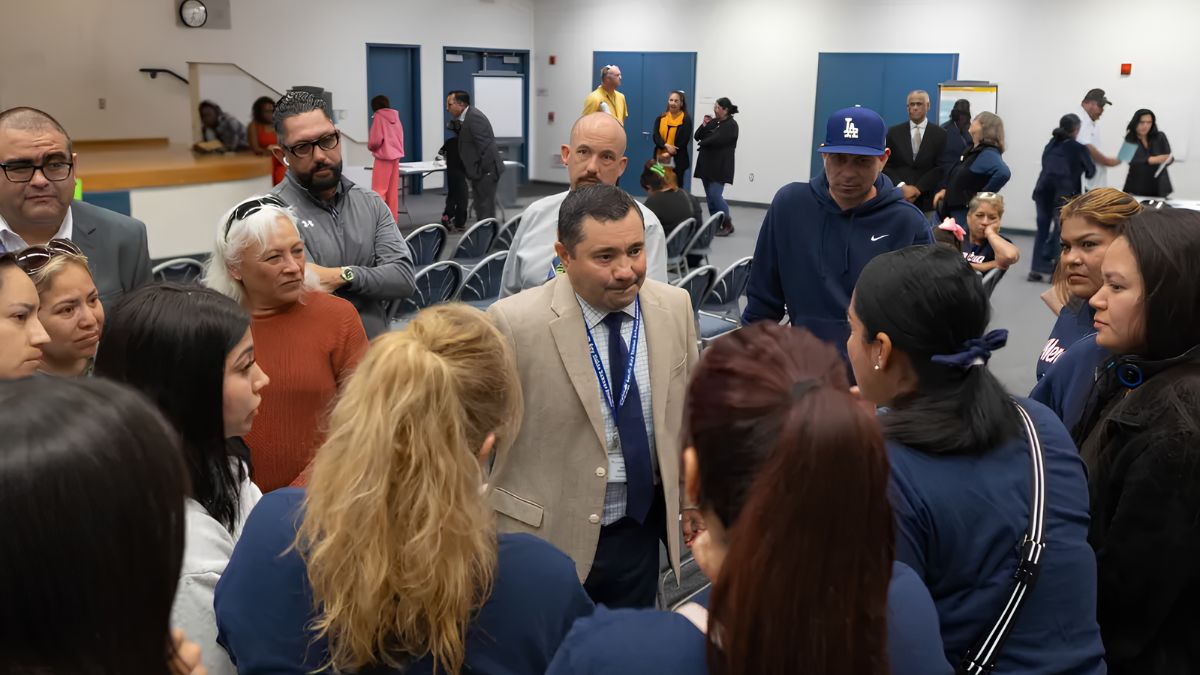
School board meetings can help San Ysidro families understand decisions that affect their children’s education, from school budgets and classroom resources to district policies, staffing and campus facilities. Yet finding the relevant information is not always straightforward. Families may need to identify the correct school district, locate an agenda, understand meeting documents and determine whether a proposal has been approved or is still under discussion.
San Ysidro is served by the San Ysidro School District for elementary and middle school education, while high school students may attend schools operated by the Sweetwater Union High School District. The appropriate board and public records depend on the school a child attends and which district has authority over the issue.
For families, the most useful starting point is to identify the responsible district and consult its official website. Board agendas, meeting minutes, policy documents, budget reports and public notices can help residents follow education decisions using information published by the agencies responsible for them.
Know
A school board is a governing body that makes decisions within the authority assigned to it by state law and district policy. Board members generally consider budgets, approve policies, oversee district leadership and make decisions about major educational priorities.
The exact responsibilities depend on the district. Some matters are decided by the board, while others are handled by the superintendent, school administrators or district departments under existing policies.
For example, a proposed change to a district-wide policy may require board consideration. A routine classroom scheduling decision, by contrast, may be handled by school administrators without a formal board vote.
This distinction matters when families are trying to find out how a particular decision was made. A school newsletter may explain how a change affects students, but the board agenda and minutes can provide additional information about the formal process.
Parents and residents should also distinguish between a proposal, a recommendation and an approved decision. A document listed on an agenda does not necessarily mean the board has adopted the measure. The minutes, recorded meeting and final board action can help clarify the outcome.
Districts
Families should first determine which district governs the school or issue they want to follow. San Ysidro’s local education system includes more than one public school district, and each has its own board, administrative structure and public records.
The San Ysidro School District serves students in the local elementary and middle school system. Its official website publishes district information, board-related materials and notices about district activities.
Visit the San Ysidro School District official website to look for board meeting announcements, agendas, minutes and other public documents.
Families whose children attend high school should also check the Sweetwater Union High School District, which serves the region’s high school system. Its governing board makes decisions within that district’s authority, including matters involving high school operations, district finances and policies.
The Sweetwater Union High School District website is the appropriate starting point for families seeking information about its schools and board proceedings.
The distinction is important because a decision made by one district may not apply to another. A question about a middle school’s district policy, for example, should generally be directed to the district governing that school rather than a separate high school district.
Families should also confirm whether a school is operated by a district or a charter organization. Charter schools may have different governing arrangements, and the correct meeting records will depend on the institution responsible for the decision.
Agendas
A meeting agenda is one of the most useful documents for understanding what a school board plans to discuss. It lists scheduled business and helps the public identify issues that may affect students, families and school employees.
Agendas commonly include administrative reports, policy proposals, budget matters, contracts, facilities projects and other items requiring board consideration. Some meetings also include presentations about academic performance, student programs or district planning.
To review an agenda, families can follow a simple process:
- Visit the official website of the relevant school district.
- Open the Board of Education, Board Meetings or Governance section.
- Find the meeting calendar or current meeting notice.
- Select the meeting date and open the agenda.
- Review the listed items and any attached reports or supporting documents.
The supporting documents are often more informative than the agenda title alone. An item described as a budget update, for example, may include financial tables, explanations of proposed spending and information about the decision being requested.
Families should pay attention to the action requested. A board may be asked to approve a contract, accept a report, conduct a public hearing or discuss a proposal without taking a final vote. Understanding that distinction helps prevent a preliminary discussion from being mistaken for a completed policy change.
Meeting schedules can change, and special meetings may be called for specific issues. Residents should therefore verify the date, time, location and participation instructions in the latest official notice rather than relying on an older calendar entry.
Minutes
Meeting minutes provide a written record of board proceedings. They are particularly useful for residents who want to understand what happened after an agenda was published.
Depending on the district’s procedures, minutes may identify attendees, summarize meeting business, record motions and votes, and document formal actions. They may not reproduce every statement made during a discussion, so families should not treat them as a complete transcript.
When checking minutes, look for the specific agenda item and determine whether the board took action. If a proposal was approved, the record may identify the motion and vote. If the item was postponed or referred for further review, the minutes may indicate that the issue remains unresolved.
Families can also compare the agenda with the minutes to see whether an item was discussed as expected or whether the board changed the order of business. When the written record is brief, a meeting recording may provide useful additional context.
The San Ysidro School District and Sweetwater Union High School District maintain their own records. Residents should consult the website of the district responsible for the school or decision rather than assuming a document will appear on both sites.
Public
School board meetings provide an opportunity for community members to follow district business and, subject to the applicable meeting rules, offer public comments. Families do not need to wait until a policy affects their child to begin learning how the process works.
Before attending, residents should review the meeting notice and check whether public comments are allowed on agenda items, non-agenda matters or both. The rules, speaking limits and sign-up procedures can differ between districts and meeting types.
For an upcoming meeting, residents should confirm:
- Whether the meeting is open to the public.
- Whether attendance is in person, online or available through both options.
- Whether public comments require advance registration.
- The deadline for signing up to speak.
- Any time limit or other rules for public testimony.
- Whether interpretation or disability accommodations are available.
Families who cannot attend may be able to watch a livestream or review a recording afterward, depending on the district’s arrangements. Written comments may also be accepted under some procedures, although submitting a message does not necessarily guarantee that it will be read aloud or included in the formal meeting record.
Residents should use official district instructions for participation rather than assuming the same rules apply to every board.
Records
Meeting agendas and minutes are only part of the public information available about education decisions. Families may also want to review budget documents, board policies, contracts, facility plans, public notices and district reports.
These records can provide context that is missing from a short meeting summary. A proposed expenditure, for example, may be easier to understand when reviewed alongside the budget report explaining its purpose and funding source.
California’s public records framework generally gives members of the public a way to request access to records held by government agencies, subject to applicable exemptions and legal requirements. Student education records, confidential personnel information and certain other materials may be restricted.
Residents who cannot locate a document on a district website can contact the district office and ask which department maintains it. When requesting records, it helps to identify the subject, approximate date and specific documents sought.
For additional information about public access to government records, consult the California Attorney General’s Public Records Act guidance. This is an official state resource explaining the framework for accessing public records.
A focused request is usually more useful than a broad demand for every document related to a topic. For instance, a parent researching a facilities proposal might request the relevant board agenda, supporting cost report, approved motion and meeting minutes.
Budgets
School budgets can influence staffing, instructional materials, student support services, transportation, technology and building maintenance. Reviewing budget documents can help families understand the financial context behind a district’s decisions.
When reading a budget, residents should distinguish between proposed spending, adopted budgets and later revisions. A preliminary financial plan may change before approval, while an adopted budget represents the district’s formal spending plan for the relevant period.
Families may also encounter terms such as restricted funds, unrestricted funds, grants and one-time funding. These categories matter because money allocated for a specific purpose generally cannot be treated as freely available for unrelated spending.
For example, a grant intended for a particular educational program may not be available to cover an unrelated facilities expense. Similarly, a one-time funding source may support a temporary project without providing enough money to sustain it in future years.
Parents interested in a particular program should look for the relevant budget line, funding explanation and board action. If the documents do not make the connection clear, they can ask the district for clarification.
Policies
District policies establish rules and procedures for issues such as attendance, student discipline, curriculum, technology use, employee responsibilities and school operations. Some policies are shaped by state or federal requirements, while others reflect local district decisions.
Families reviewing a proposed policy should look for the current version, any proposed revisions and the documents explaining why the change is being considered. Comparing the existing policy with the proposed wording can reveal what would actually change.
The board’s formal action is also important. A policy may be discussed at one meeting and approved at another, or it may be sent back for revisions. Residents should check the relevant minutes or final policy publication before assuming a proposed change is in effect.
Questions about how a policy is applied at an individual school may need to be directed to the principal or district administration. The board generally oversees policy and governance rather than managing every day-to-day classroom decision.
Follow-up
Families who want to remain informed can take a few practical steps to follow education decisions over time.
First, identify the district responsible for the school. Next, check the board calendar regularly and review agendas for topics relevant to the family. Save copies of important reports and compare them with the minutes after the meeting.
For decisions involving a longer process, such as a facilities project or budget revision, it may be necessary to review several meetings. An initial presentation might be followed by public discussion, revised documents and a later vote.
Residents can also contact board services or the district office with questions about meeting records, public comment procedures and document availability. When making an inquiry, identify the meeting date or agenda item whenever possible.
Following official records does not require a detailed knowledge of school governance. By starting with the agenda, checking the outcome in the minutes and reviewing supporting documents, residents can build a clearer picture of how education decisions are considered and approved.
For San Ysidro families, the most important step is to use the correct district’s official information channels. The San Ysidro School District and Sweetwater Union High School District serve different parts of the local education system, so identifying the responsible governing body can save time and prevent confusion. Regularly checking official meeting notices and records helps families understand proposals, distinguish discussions from final decisions and participate more effectively in public education matters.
FAQs
Where can San Ysidro families find school board agendas?
Check the official website of the school district responsible for the school.
What do school board meeting minutes show?
They record meeting business, formal actions and votes, subject to district procedures.
Can parents attend school board meetings?
Public meetings are generally open, subject to applicable meeting rules and notices.
How can families request public education records?
Contact the relevant district office or follow its public records request procedure.
Which district should high school families check?
Check Sweetwater Union High School District for schools governed by that district.