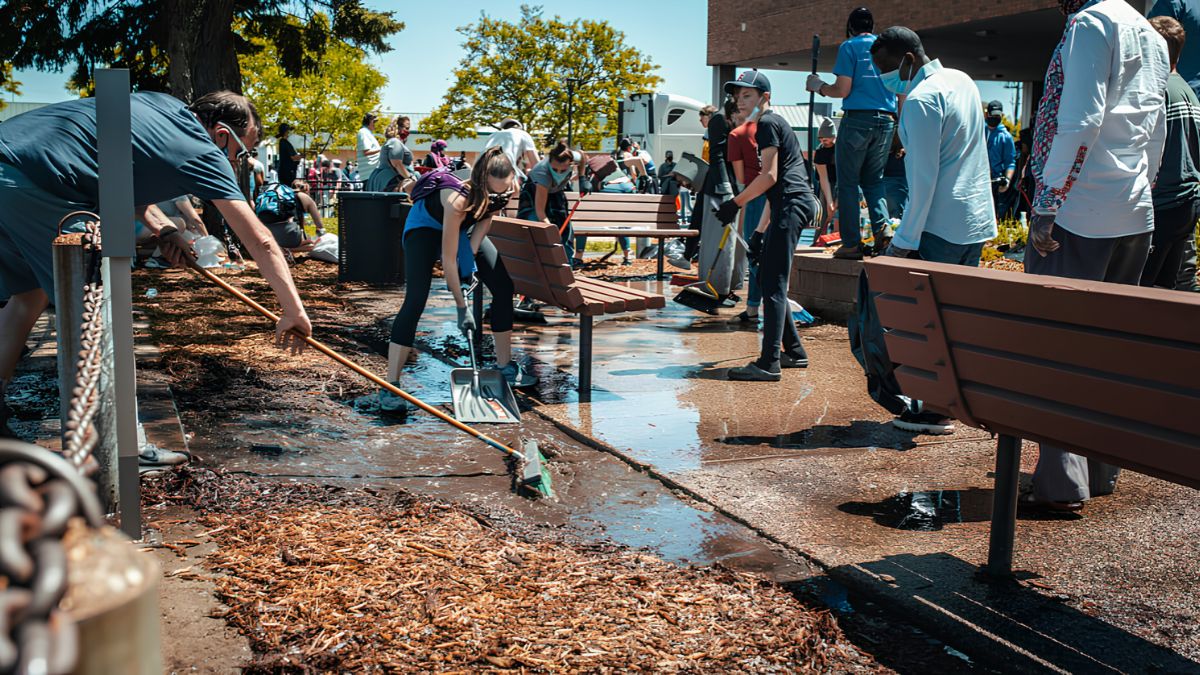
A community clean-up can make streets, sidewalks, parks and shared spaces in San Ysidro more welcoming while encouraging residents to work together on neighbourhood improvements. Whether a group plans to remove litter from a residential street, tidy up an approved public area or collect rubbish near a community gathering place, a successful event requires more than volunteers and trash bags. Organisers need a clear plan, suitable safety equipment, responsible waste disposal arrangements and a way to protect participants and the surrounding environment.
San Ysidro community groups can make these activities more effective by coordinating with the appropriate local authorities, identifying the types of waste likely to be encountered and assigning volunteers manageable tasks. They should also consider accessibility, weather conditions, children’s safety and the needs of residents who may prefer to participate in different ways.
A well-organised clean-up does not have to be large or expensive. With careful preparation and realistic goals, even a small group can improve a shared space while helping residents know how to manage waste responsibly.
Planning
The first step is deciding where the clean-up will take place and what the volunteers will accomplish. A clearly defined area makes it easier to estimate the number of participants, choose equipment and arrange waste collection.
Potential locations may include selected sidewalks, neighbourhood streets, approved public gathering spaces or areas around community facilities. However, organisers should not assume that every public space is available for an independent clean-up. Parks, roadways, drainage areas and privately owned properties may have different access, permission and safety requirements.
Before announcing the event, contact the relevant property manager or public agency to confirm whether permission is required. The City of San Diego can help direct organisers to information about municipal services, public spaces and applicable rules.
Next, inspect the proposed site during daylight. Look for broken glass, sharp metal, discarded needles, traffic hazards, uneven surfaces, standing water and other potential dangers. Avoid areas where volunteers would need to enter traffic lanes, climb unstable structures or handle hazardous materials.
Set a realistic target. A first event might focus on a single block, a small approved public area or a specific type of litter. Expanding the area too quickly can leave volunteers tired, increase safety risks and make disposal more difficult.
A simple planning checklist can keep the project on track.
- Select an appropriate site and confirm permission.
- Choose a date and a backup plan for poor weather.
- Estimate volunteer numbers and assign a coordinator.
- Identify likely waste types and appropriate collection methods.
- Arrange disposal, recycling and collection services in advance.
- Prepare safety equipment, drinking water and emergency contacts.
- Tell participants what they should and should not collect.
The event should have a defined finishing time. A short, well-managed activity is generally easier to supervise than an open-ended clean-up with no clear boundaries.
Permissions
Permission and coordination are especially important when volunteers plan to work on public land or near roads. Depending on the location and activity, organisers may need to follow rules covering public-space use, traffic safety, waste placement or access to facilities.
Contact the City of San Diego or the responsible property manager before placing bags, signs, tables or collection containers in public areas. Ask whether there are designated procedures for community clean-ups, whether collected waste can be left at an approved location and whether special arrangements are needed for bulky items.
Do not leave rubbish bags beside a public bin or on a sidewalk unless the responsible agency has explicitly approved that arrangement. Unauthorised piles can obstruct pedestrians, attract pests or create additional work for sanitation crews.
If the activity involves a roadway, construction area, drainage channel or other potentially dangerous location, choose a safer alternative unless the appropriate authority has approved a suitable work plan. Volunteers should never be directed into moving traffic to retrieve litter.
Private property requires permission from the owner or authorised manager. A clean-up near a business, apartment complex or commercial site should be coordinated with the people responsible for the property.
Organisers should also check whether their planned activity requires insurance, a formal volunteer waiver or other documentation. Requirements vary by location and activity, so it is better to confirm them before recruiting participants.
Equipment
The right equipment protects volunteers and makes the work more efficient. Organisers should select supplies based on the site, expected waste and the participants’ abilities.
For ordinary litter collection, useful equipment includes sturdy trash bags, litter grabbers, work gloves, closed-toe footwear, drinking water and basic first-aid supplies. High-visibility clothing may be appropriate when working near vehicle access areas, although it does not make an unsafe roadside location acceptable.
| Equipment | Purpose | Important consideration |
|---|---|---|
| Litter grabbers | Pick up ordinary litter without direct hand contact | Check for damage before use |
| Work gloves | Protect hands during routine collection | Use suitable gloves for the task |
| Sturdy trash bags | Contain ordinary rubbish | Avoid overfilling or creating heavy loads |
| Closed-toe footwear | Reduce exposure to sharp or uneven objects | Choose secure, comfortable shoes |
| High-visibility clothing | Improve visibility in suitable locations | Never use it as a substitute for traffic controls |
| Drinking water | Help volunteers stay hydrated | Provide regular opportunities for breaks |
| First-aid kit | Support minor first-aid needs | Have a designated person who knows where it is |
| Handwashing supplies | Support hygiene after collection | Wash hands before eating or drinking |
Ordinary disposable gloves are not suitable protection for every waste type. Thick gloves may help with routine litter handling, but even heavy-duty gloves do not make it safe to pick up needles, chemical containers or unknown hazardous materials.
Volunteers should avoid touching their faces while working and should wash their hands thoroughly after removing gloves. Eating, drinking and smoking should take place away from collection and sorting areas.
Organisers should also provide enough equipment for the planned group size. Sharing a limited number of grabbers or gloves can create delays and encourage participants to pick up rubbish by hand.
Volunteers
A clean-up works best when every participant understands their role. At the beginning of the event, hold a short briefing covering the site’s boundaries, safety procedures, waste categories and emergency arrangements.
Assign a coordinator to oversee the activity and make sure volunteers know whom to contact if they find a dangerous item. If the group is large enough, appoint team leaders to supervise smaller sections.
Children can participate in suitable activities when the event is designed around their age and abilities. They should remain under appropriate adult supervision and should only collect low-risk litter in designated areas. Children must not handle broken glass, sharp objects, unknown containers or potentially contaminated waste.
Older adults and people with disabilities should also have opportunities to contribute without being expected to perform physically demanding tasks. Some participants may prefer to record filled bags, distribute water, check supply levels, help with registration or share information with nearby residents.
A successful clean-up should not depend on volunteers taking unnecessary risks. Anyone who feels unwell, becomes overheated or encounters an unsafe situation should be able to stop and notify the coordinator without pressure.
Safety
Safety procedures should be established before volunteers begin collecting rubbish. Organisers should explain which items are acceptable to collect and which must be left untouched.
Routine litter can include paper, empty food wrappers and other non-hazardous debris. Even these items should be handled carefully because they may contain sharp edges or contaminated material.
Never ask volunteers to pick up discarded needles, unknown chemical containers, leaking batteries, suspicious powders, pressurised containers or other potentially hazardous materials. Keep people away from the item and contact the appropriate local authority or specialised response service for guidance. If an item appears immediately dangerous, follow emergency procedures.
Do not open sealed containers to identify their contents. Avoid handling medical waste, animal carcasses or materials that may contain bodily fluids. Volunteers should not attempt to neutralise chemicals or transport hazardous items in personal vehicles.
Traffic presents another significant risk. Keep the clean-up away from active roadways, intersections and locations where drivers may not expect pedestrians. Do not allow volunteers to stand in bike lanes or block accessible routes. If safe separation from traffic cannot be maintained, relocate the activity.
Weather should also influence the plan. In warm conditions, schedule work during cooler hours, provide water and encourage breaks in shaded areas. Stop the event if heat, poor air quality, heavy rain or other conditions make outdoor work unsafe.
Finally, make sure everyone knows the meeting point, the location of first-aid supplies and the procedure for reporting an injury. For a serious medical emergency, call 911 in the United States.
Sorting
Separating waste can improve recycling outcomes, but only when the receiving facility accepts the materials. Organisers should check local guidance before deciding which categories to collect separately.
Common categories may include ordinary trash, accepted recyclable containers and eligible yard debris. The exact categories depend on the material, its condition and the available collection service.
Do not assume that every item marked with a recycling symbol belongs in the same recycling stream. Food residue, mixed materials and local facility rules can affect whether an item is accepted. If organisers cannot confirm that an item is recyclable, they should follow the receiving service’s guidance rather than placing it in a recycling bag automatically.
Keep ordinary litter collection separate from any specialised waste programme. Batteries, electronics, paint, motor oil, chemicals and other household hazardous waste may require designated drop-off arrangements. They should not be mixed into ordinary rubbish bags.
Volunteers should also avoid manually sorting waste when the contents are unknown or potentially contaminated. Sorting should only be done where it is safe and consistent with the receiving facility’s instructions.
A clear labelling system can help prevent mistakes. Use separate, clearly marked containers where appropriate, and explain the accepted materials to volunteers during the briefing.
Disposal
Responsible disposal is one of the most important parts of the clean-up. Collecting rubbish without a confirmed disposal plan can simply move the problem from one location to another.
Before the event, decide where each type of waste will go. Contact the appropriate waste collection provider or local agency to confirm accepted materials, collection arrangements, operating hours and any applicable fees.
For a small clean-up, organisers may be able to use an approved collection arrangement for ordinary rubbish. Larger activities may require advance coordination or a designated collection point. Do not assume that municipal crews will automatically collect bags left in a public space.
The City of San Diego provides information about waste services and environmental programmes through its official website. San Diego County also provides environmental health information and resources relevant to waste management. Organisers should use these official sources to identify the appropriate contact for their location and the type of material involved.
Bulky waste, abandoned furniture and large appliances should not be moved unless the group has the equipment, permission and collection plan to handle them safely. Some items may require specialised services.
After collecting ordinary rubbish, close the bags securely without compressing them by hand. Keep bags away from drainage openings, traffic routes and pedestrian access points while awaiting an authorised collection. Do not leave waste unattended in a location where it could scatter or create a hazard.
If volunteers discover illegal dumping, extensive debris or material that appears hazardous, document the location from a safe distance if appropriate and report it through the relevant official channel. The group should not attempt to remove a large or dangerous dumping site without professional guidance.
Environment
A community clean-up can support environmental awareness when organisers think beyond the rubbish collected on the day. The activity can also help residents identify recurring litter problems and consider ways to prevent them.
For example, if a particular area repeatedly accumulates food packaging, the group could explore whether additional bins, better signage or outreach to nearby businesses might help. Any proposed changes should be discussed with the relevant property owner or public agency.
Volunteers should avoid damaging plants, disturbing wildlife or removing materials that may be part of a protected habitat. A clean-up is not an invitation to cut vegetation, enter drainage systems or disturb natural areas without permission.
Reducing waste at the source is equally important. Community groups can encourage residents to use reusable water bottles, bring refillable containers to events where appropriate and avoid unnecessary single-use supplies. However, the event should still provide suitable disposable supplies when needed for hygiene or safety.
Organisers can also invite local schools, neighbourhood associations and community organisations to participate in future activities. These partnerships can help maintain momentum, but responsibilities should remain clear so that the same site is not left without follow-up.
Communication
Clear communication helps residents understand the purpose of the event and decide whether they can participate. Announcements should include the date, start and finish times, meeting location, age or supervision requirements, recommended clothing and the types of tasks volunteers will perform.
Explain whether equipment will be provided or participants should bring their own. If the group has a limited supply of grabbers or gloves, mention this in advance.
For San Ysidro’s diverse community, organisers may wish to share notices in English and Spanish. Use straightforward language and provide a contact method for residents who have questions about accessibility, transport or participation.
Avoid promising that every volunteer will be assigned a particular task if the group cannot guarantee it. Be transparent about the site’s condition and explain that certain materials will be left for qualified personnel.
After the event, share a brief update with participants and the wider community. It might include the area covered, the number of volunteers, the amount of ordinary litter collected and any remaining concerns reported to the relevant agency. Report quantities honestly, and do not claim that all collected materials were recycled unless the receiving service confirms it.
Photographs can help document progress, but organisers should respect privacy and obtain appropriate permission before publishing identifiable images. Participation should not require someone to appear in promotional material.
Follow-up
The work does not necessarily end when the last bag is collected. Organisers should confirm that the waste was accepted by the designated collection service and that the site was left safe and accessible.
Volunteers should inspect the work area from a safe distance for forgotten equipment, loose rubbish or obstructions. They should not return to hazardous items that were deliberately left for professional handling.
Ask participants what worked well and what should change next time. Were there enough gloves and grabbers? Did the collection arrangement operate as expected? Were the boundaries clear? Did anyone encounter a hazard that the planning process missed?
Record these lessons in a short event report. Include the date, location, number of participants, supplies used, disposal arrangements and any follow-up actions. This record can help future organisers plan more efficiently and demonstrate responsible management to potential community partners.
A recurring clean-up may be useful if litter continues to accumulate, but regular collection should not replace reporting persistent dumping or requesting appropriate infrastructure. Long-term improvements may require coordination with property managers, waste services or local authorities.
A safe and successful community clean-up in San Ysidro begins with a clear plan and ends with responsible disposal and follow-up. By confirming permissions, providing appropriate equipment, setting firm safety boundaries and arranging approved waste collection in advance, community groups can protect volunteers while improving shared spaces.
The strongest events are not necessarily the largest. They are the ones that bring people together, manage risks carefully and leave the neighbourhood cleaner without creating new problems for residents, sanitation workers or the environment.
Official Resources
- City of San Diego – Information about city services, public spaces and waste management.
- San Diego County – County services and environmental health resources.
- CalRecycle – California recycling, waste prevention and disposal guidance.
FAQs
Do community clean-ups need permission?
Permission may be required, depending on the location and activity.
What equipment should volunteers bring?
Use grabbers, suitable gloves, closed-toe shoes and drinking water.
Should volunteers pick up discarded needles?
No. Keep away and contact the appropriate authorities.
How should collected rubbish be disposed of?
Arrange an approved collection or disposal method before the event.
Can children participate in a clean-up?
Yes, with supervision and age-appropriate, low-risk tasks.