Planning a pedestrian border crossing at San Ysidro requires more than choosing a departure time and gathering a few travel essentials. Travelers should know which documents they need, how identity checks work, what U.S. or Mexican entry requirements apply to their circumstances, and how to prepare for possible delays.
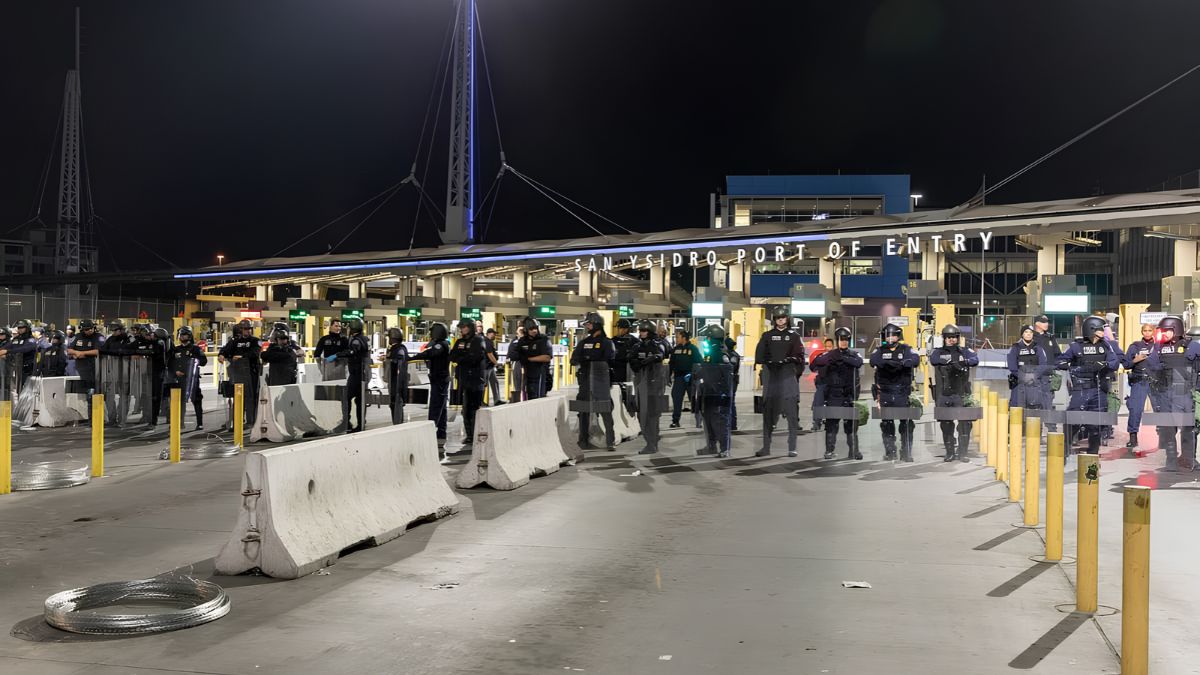
The San Ysidro Port of Entry connects San Diego, California, with Tijuana, Baja California, and is one of the busiest land border crossings between the United States and Mexico. People cross on foot for work, shopping, medical appointments, family visits, tourism, and other everyday reasons. Although the crossing is routine for many travelers, requirements can differ significantly depending on nationality, immigration status, destination, and purpose of travel.
The most important step is to confirm the requirements for the country you intend to enter before leaving home. A document that permits someone to enter one country may not be sufficient for entry into the other. Preparing in advance can help reduce avoidable problems at the border.
Planning
Start by identifying the direction of travel. Are you walking from Tijuana into the United States, or from San Ysidro into Mexico? The two directions involve different authorities, documentation rules, and inspection procedures.
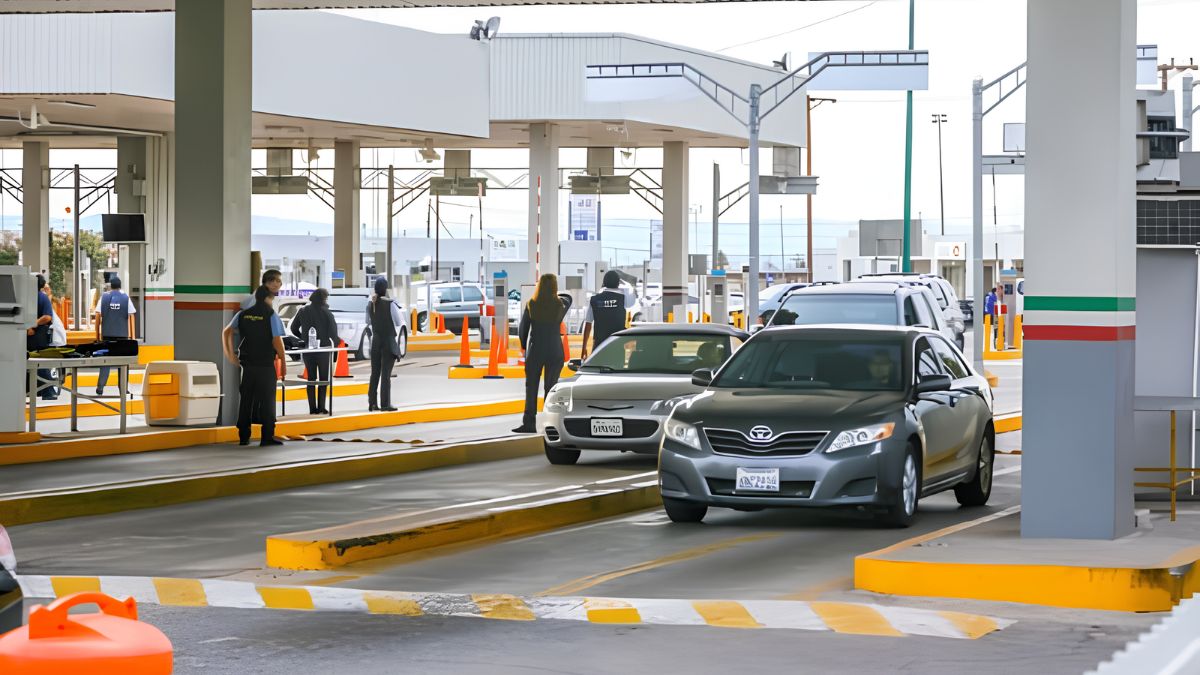
For entry into the United States, U.S. Customs and Border Protection (CBP) conducts inspections and determines whether travelers meet applicable entry requirements. For entry into Mexico, Mexican immigration authorities determine whether travelers satisfy the conditions for admission.
Your citizenship and immigration status are central to this process. A U.S. citizen, a Mexican citizen, a lawful permanent resident of the United States, and a visitor holding a foreign passport may have different documentation requirements.
You should also consider your reason for crossing. Tourism, employment, study, family visits, and other activities can be subject to different rules. Permission to enter a country as a visitor does not automatically authorize employment or long-term residence.
Before traveling, review official government guidance rather than relying exclusively on social media posts, travel forums, or advice from someone whose circumstances may differ from yours.
Documents
The documents you need depend on your nationality, status, destination, and the rules applicable to your trip. A passport is an important travel document, but it is not the only document that may be relevant.
For entry into the United States, U.S. citizens generally need to establish their citizenship and identity using an acceptable document. U.S. lawful permanent residents generally need their valid permanent resident card and may need additional documentation depending on their circumstances. Foreign nationals must meet the entry requirements applicable to their immigration category, which may include a valid passport and visa or another qualifying travel document.
For entry into Mexico, requirements differ by nationality and immigration status. Some travelers may need a passport and, depending on their circumstances, a visa or other supporting documents. Mexican citizens should confirm which documents are appropriate for their particular travel situation.
Before departing, check that your documents are valid, readable, and readily accessible. If your name differs across documents, or you are traveling with children, review any additional requirements that may apply.
The official U.S. Customs and Border Protection website provides guidance on U.S. border entry, acceptable travel documents, and inspection procedures. For Mexico’s requirements, consult the Mexican government’s official portal and its immigration authority, the Instituto Nacional de Migración.
Identity
Identity checks are a standard part of international border crossings. Officers may ask travelers to present their documents, confirm their identity, explain the purpose of their trip, and answer questions about their intended stay.
Travelers should answer questions truthfully and clearly. If an officer requests additional information, provide the requested documents when available. Do not assume that carrying a passport or visa guarantees admission, because officers may need to verify eligibility under the applicable rules.
For travelers entering the United States, CBP officers conduct inspections at the port of entry. Depending on the circumstances, an inspection may involve checking travel documents, reviewing immigration records, asking questions about the trip, or referring the traveler for additional examination.
Travelers entering Mexico are subject to the procedures and requirements established by Mexican authorities. The documents requested and questions asked may depend on nationality, immigration status, and the purpose and duration of the visit.
It is useful to keep travel documents in a secure but accessible place. Avoid packing passports, immigration cards, or supporting paperwork in luggage that is difficult to reach while standing in a pedestrian queue.
If your travel documents have been lost, stolen, damaged, or replaced recently, resolve the issue before traveling whenever possible. Contact the appropriate consulate or immigration authority to establish which documents you need. Do not assume that a photograph or photocopy of a passport will be accepted as a substitute for the required original document.
U.S. Entry
Travelers walking from Tijuana into San Diego must meet U.S. entry requirements applicable to their circumstances. These requirements are not identical for everyone.
U.S. citizens should carry appropriate evidence of citizenship and identity. U.S. lawful permanent residents should carry their permanent resident documentation. Foreign visitors generally need the passport and visa, or other qualifying authorization, required for their nationality and immigration category.
Some eligible foreign travelers may be able to use the Visa Waiver Program with an approved Electronic System for Travel Authorization (ESTA), subject to the program’s conditions. However, ESTA eligibility does not mean that every traveler can use it, and it should not be treated as a substitute for checking the requirements applicable to the individual.
A Border Crossing Card, often called a laser visa, is another document used by eligible Mexican citizens for certain types of travel to the United States. The conditions of use, permitted travel area, and other restrictions depend on the document and the traveler’s circumstances. Travelers should check the official rules before relying on it for a particular trip.
Be prepared to explain your destination and purpose of travel if asked. For example, a visitor attending a medical appointment may find it helpful to have appointment details available, while someone visiting family may wish to know the address where they will be staying.
Supporting information does not guarantee admission, and not every traveler will be asked to provide it. Its purpose is to help you answer relevant questions accurately.
Official information on passports, visas, and border procedures is available through U.S. Customs and Border Protection. Travelers should check current guidance before departing, especially if their immigration status or travel documents have recently changed.
Mexico Entry
Travelers walking from San Diego into Tijuana should check the requirements for entering Mexico before beginning the crossing. Requirements depend on nationality, the purpose of travel, the length of the visit, and the applicable immigration rules.
Mexican citizens should ensure they have suitable identification and travel documentation for their circumstances. Foreign nationals should verify whether they need a passport, visa, immigration authorization, or additional supporting documents.
Some foreign visitors may be eligible to enter Mexico without obtaining a visa in advance, while others must secure the appropriate visa before traveling. Visa exemptions depend on nationality and other applicable conditions. A traveler should not assume that permission to enter the United States also establishes permission to enter Mexico.
The expected duration of the visit is another consideration. Travelers planning a brief shopping trip may have different practical needs from those intending to stay for several weeks, attend an extended program, or undertake activities that require a specific immigration status.
Depending on the traveler’s circumstances, Mexican authorities may ask about the purpose of the visit, accommodation, return or onward travel, and the intended length of stay. Carry relevant information where appropriate and answer questions honestly.
Consult Mexico’s Instituto Nacional de Migración (INM) for official immigration information. If you are uncertain about whether a visa or another authorization is required, confirm the answer with the Mexican authorities or a Mexican consulate before traveling.
Pedestrian Routes
The San Ysidro Port of Entry has pedestrian facilities, but travelers should confirm which access route is appropriate for their direction of travel and current circumstances. The pedestrian crossing arrangement may differ from the route used by private vehicles, buses, or commercial traffic.
Travelers heading north from Tijuana should review the available pedestrian entry information for the San Ysidro port. Those walking south from San Ysidro into Tijuana should confirm the appropriate route into Mexico.
Do not assume that every pedestrian entrance, lane, or processing facility operates in the same way throughout the day. Access arrangements, staffing, and local procedures can change.
Before setting out, consult official port-of-entry information and allow time to locate the pedestrian approach. If you are using public transportation, arranging a pickup, or connecting to another journey, account for the possibility of delays at the border.
Travelers who need accessible routes should check current accessibility information in advance. People with limited mobility, families traveling with small children, and those carrying medical equipment may benefit from allowing additional time to navigate pedestrian areas and queues.
Keep to designated pedestrian routes, follow posted instructions, and avoid entering vehicle lanes or restricted areas. If you are uncertain about where to proceed, ask an authorized officer or follow the official signs.
Wait Times
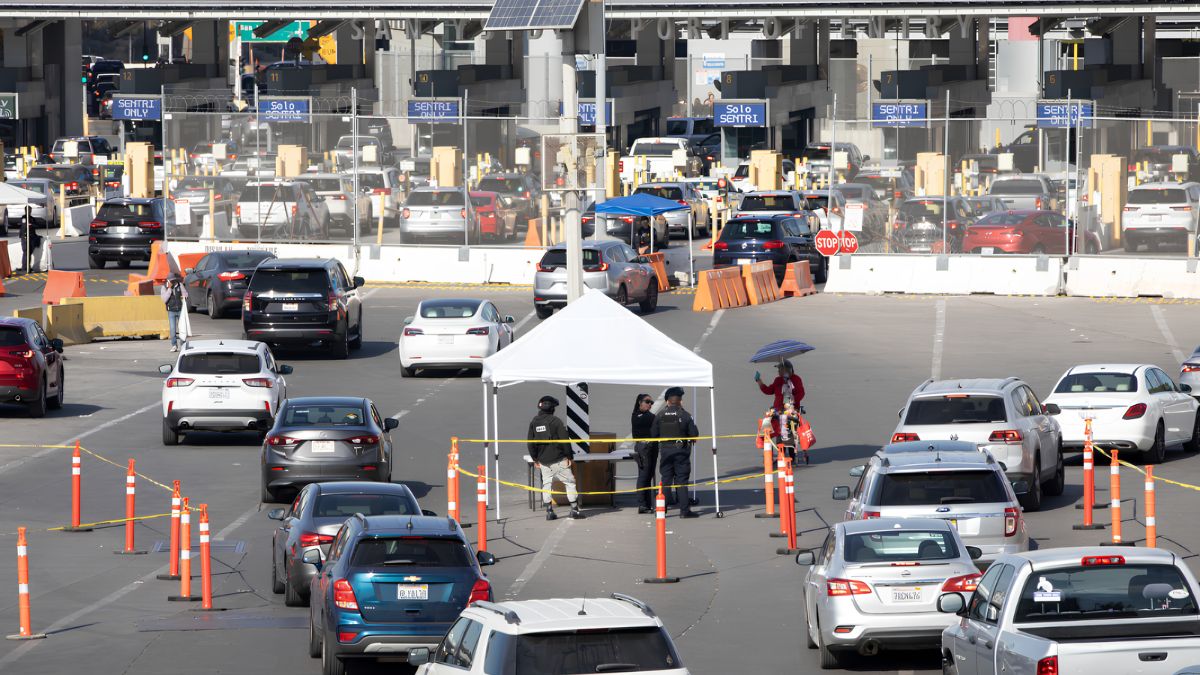
Border wait times can vary according to traffic levels, staffing, time of day, holidays, and other operational conditions. Even when a crossing usually takes a short time, delays are possible.
If your journey involves a fixed appointment, work shift, flight, or scheduled connection, allow a reasonable time buffer. Avoid planning an itinerary that depends on clearing the border within an exact number of minutes.
Check current official information before leaving. CBP provides border wait-time information for relevant U.S. ports of entry, including pedestrian processing where available. The information is useful for planning but should not be treated as a guarantee of the actual time you will spend in line.
You can consult the CBP Border Wait Times resource to review available information for the San Ysidro crossing. Confirm that you are checking the correct direction and pedestrian category, as vehicle wait times may not reflect pedestrian conditions.
For practical planning, consider the time required to reach the crossing, locate the correct pedestrian entrance, complete inspection, and travel onward to your destination. The border queue is only one part of the journey.
If a delay would cause you to miss an appointment, notify the relevant person or organization as soon as reasonably possible. Keeping contact details and appointment information available can make unexpected delays easier to manage.
Declarations
Travelers should know that crossing a border may involve requirements beyond identity and immigration documents. Customs rules can apply to goods, purchases, food, cash, commercial merchandise, and other items brought across an international boundary.
If you are carrying purchases from Tijuana into the United States, check the current U.S. customs rules and any applicable allowances or restrictions. If you are traveling from the United States into Mexico with goods, check Mexico’s requirements.
Certain foods, plants, animal products, and other items may be restricted or require declaration. Rules can vary according to the item, its origin, and the circumstances of the journey.
Cash and monetary instruments may also be subject to declaration requirements when crossing an international border. Do not assume that carrying cash is prohibited, but check whether reporting obligations apply to the amount and type of funds you intend to transport.
Travelers should declare items when required and answer customs questions truthfully. If you are uncertain about whether an item is permitted, consult the relevant customs authority before crossing.
The CBP travel guidance provides information about U.S. customs requirements, prohibited items, and declarations. For the Mexican side, review the current official guidance from the relevant Mexican customs authority.
Families
Adults traveling with children should check whether additional documentation or consent arrangements may be necessary. Requirements can vary depending on the child’s citizenship, the adults accompanying the child, custody circumstances, and the destination country’s rules.
Parents or guardians should carry the child’s required travel documents and ensure that the information matches the child’s identity. If a child is traveling with one parent, another relative, or a non-parent adult, confirm whether additional authorization or supporting documentation is recommended or required for that particular journey.
Families should also plan for practical needs during a wait. Water, essential medication, weather-appropriate clothing, and necessary supplies may be useful, subject to applicable rules for items brought across the border.
Travelers with medical conditions should keep essential medication accessible and retain prescriptions or other supporting information where appropriate. Check the rules for medications before crossing, particularly if they contain controlled substances or are subject to restrictions.
Preparation
A simple preparation routine can reduce last-minute uncertainty. Before leaving for San Ysidro, confirm the destination country’s entry requirements, review your documents, check the current pedestrian crossing information, and plan how you will continue your journey after the inspection.
Use the following checklist as a starting point:
- Confirm which country you are entering and which requirements apply to your nationality and immigration status.
- Check that the required travel documents are valid and accessible.
- Review visa, authorization, and supporting-document requirements.
- Check current pedestrian crossing information and available wait-time updates.
- Prepare accurate details about your destination and purpose of travel.
- Review customs rules for purchases, food, medication, cash, and other items.
- Allow extra time for queues, inspection, and onward transportation.
- Keep important documents secure and avoid relying on unofficial advice.
If you have a complicated immigration history, a pending application, a previous refusal of entry, or uncertainty about the validity of your documents, seek guidance from the relevant government authority or a qualified immigration professional before traveling. General travel articles cannot determine an individual’s eligibility for entry.
Planning a pedestrian border crossing at San Ysidro is easier when travelers understand the requirements before arriving at the port of entry. The correct documents, a clear understanding of immigration rules, awareness of customs obligations, and a review of current pedestrian crossing information can help make the journey more organized.
Requirements differ according to nationality, immigration status, destination, and travel purpose. Travelers should therefore rely on official U.S. and Mexican government sources rather than assuming that another person’s experience will apply to their situation.
Allowing additional time, keeping documents accessible, and preparing to answer inspection questions accurately can also reduce avoidable complications. With appropriate preparation, travelers can approach the San Ysidro pedestrian crossing with a clearer understanding of what to expect and which requirements they need to meet.
FAQs
What documents do I need to cross San Ysidro on foot?
Requirements depend on your nationality, immigration status, destination, and travel purpose.
Can I walk across the San Ysidro border?
Yes. San Ysidro has pedestrian crossing facilities. Check current access information before traveling.
Where can I check San Ysidro pedestrian wait times?
Consult the official CBP Border Wait Times website for available pedestrian information.
Do I need a visa to enter Mexico or the United States?
Visa requirements depend on your nationality, immigration status, and destination.
Can border officers ask about my travel plans?
Yes. Officers may ask questions about your identity, destination, and purpose of travel.